Understanding the major factors that influence tolerances.
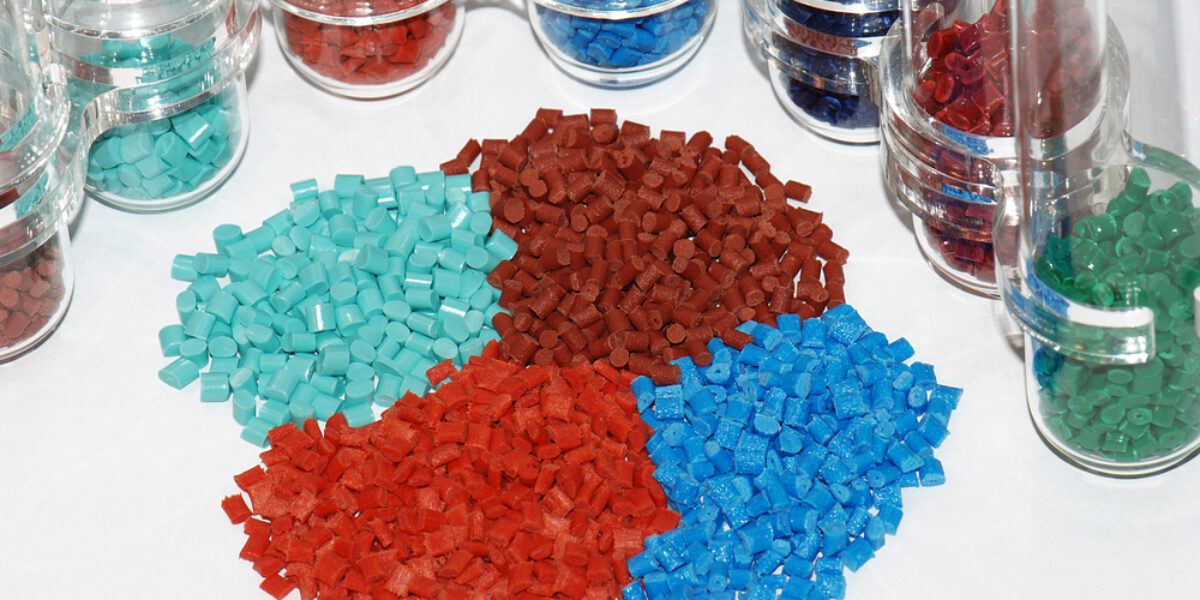
Achieving precise tolerances in plastic parts is a complex balancing act that depends on a variety of factors. These include the material properties, environmental conditions, part geometry, and processing methods. Understanding how each of these variables contributes to dimensional accuracy is essential for engineers, machinists, and designers striving for optimal performance in plastic components.
Material Selection: Foundation of Tolerance Control
One of the most critical and foundational factors influencing tolerances is material selection. Plastics vary widely in their mechanical, thermal, and structural properties, all of which directly affect their ability to maintain dimensional stability during and after machining.
In this guide, we’ll explore the major factors that influence how well tolerances can be managed in plastic machining and molding. By the end, you’ll have a more comprehensive perspective on how to approach tolerance planning and what to expect based on material selection and other key conditions.
I’ll also reference the performance rectangle, a valuable tool that visualizes the typical tolerance range (Typ) by material class, helping contextualize this information across different plastic types.
While it is possible to machine these materials to tighter tolerances, doing so requires stringent process controls, such as:
- Thermal stabilization before and after machining
- Multi-stage machining processes with time allowed for material relaxation
- Specialized tooling and clamping methods to reduce stress
Commodity Plastics
Lower-end plastics such as PVC (Polyvinyl Chloride), ABS (Acrylonitrile Butadiene Styrene), and HDPE (High-Density Polyethylene) tend to have more inherent flexibility and are more prone to thermal expansion and mechanical deformation. These materials often exhibit higher rates of movement under machining loads and environmental changes. As a result, standard tolerances for such materials typically fall in the range of ±0.015 inches.
Temperature Sensitivity: The Thermal Expansion Factor
Temperature plays a significant role in plastic behavior. Unlike metals, which have relatively low coefficients of thermal expansion, most plastics undergo noticeable dimensional changes in response to temperature variations.
Materials with low temperature resistance, like Polypropylene or LDPE (Low-Density Polyethylene), are particularly susceptible to expansion and contraction. Even minor temperature changes—such as those encountered in a non-climate-controlled shop—can result in dimensional shifts significant enough to affect fit and function.
Conversely, materials like PEEK or Torlon, which possess high heat resistance and low thermal expansion coefficients, demonstrate minimal fluctuation under thermal stress, allowing for more controlled tolerances and consistent results.
To mitigate thermal variability:
- Maintain consistent ambient temperatures during machining
- Allow materials to acclimate to room temperature before cutting
- Avoid aggressive tool speeds that cause localized heating
Compressive Strength and Dimensional Stability
Another often-overlooked factor in tolerance control is compressive strength—how well a material resists deformation under pressure. The analogy of Jello vs. Concrete captures this idea vividly.
Imagine machining a part made of PTFE (Polytetrafluoroethylene), a material known for its low friction and chemical resistance. PTFE is soft and pliable, and during machining, it can compress, flex, or distort under tool pressure. After the pressure is removed, the material may partially rebound, leading to parts that don’t meet spec despite careful setup.
Contrast that with a stiffer material like Torlon. Due to its high compressive modulus, Torlon resists movement under mechanical load and maintains dimensional stability even when machined aggressively. This inherent rigidity makes it far easier to produce high-tolerance parts without extensive secondary operations or stress relief cycles.
For soft materials like PTFE, special measures might be needed:
- Use of sharp, high-shear tooling to reduce force
- Lower cutting speeds to minimize heat and deformation
- Intermediate inspection and incremental passes
Effect of Fillers: Boosting Stability
One of the most effective ways to improve tolerance potential is through the use of reinforcing fillers. Common fillers include Glass Fiber, Carbon Fiber, and Graphite, which are often added to base resins to enhance their mechanical properties.
These additives offer several benefits:
- Reduced thermal expansion: Glass and carbon fibers limit how much the material expands or contracts with temperature changes.
- Increased rigidity: The structural stiffness of fillers resists deflection under load, improving machining accuracy.
- Enhanced wear resistance: Especially valuable in moving parts, fillers help maintain dimensional consistency over time.
These addFor example, Glass-Filled Nylon can hold tighter tolerances compared to unfilled Nylon, which tends to absorb moisture and swell. Similarly, Carbon-Filled PEEK shows improved machinability and precision over its virgin counterpart.
However, fillers can also make materials more brittle or abrasive, so tool wear and surface finish should be monitored accordingly.itives offer several benefits:
Impact of Part Size: Scaling Tolerance Expectations
Tolerance control becomes more challenging as part size increases. Plastics naturally expand and contract at higher rates than metals, and these effects compound over larger dimensions.
A ±0.002” tolerance on a 0.5” part may be reasonable for many materials. But trying to hold the same tolerance across a 24” component made from HDPE would likely result in failure. This is due to:
- Greater cumulative expansion over long spans
- Increased warping potential during cooling
- Higher stress accumulation from uneven material flow or clamping
For larger parts:
- Tolerances must be scaled proportionally to part dimensions
- Use of isotropic materials or filler-reinforced plastics is advisable
- Finite Element Analysis (FEA) or simulation tools can help predict distortion
Machining setups should also account for this by providing extra stock for finish cuts and using fixturing that supports the part evenly to reduce sag or warp during machining.
Final Considerations: Precision through Process Supporting Advanced and Innovative Features
While plastic machining presents unique challenges, it’s possible to achieve incredibly tight tolerances with the right materials, processes, and planning. In many cases, tolerances as tight as ±0.0005 inches can be achieved—especially on small, high-performance parts—when machining is done in a climate-controlled environment using specialized tooling and rigorous quality control.
Some final tips for optimal tolerance control:
- Collaborate with material suppliers to understand the limits of specific grades
- Use statistical process control (SPC) for repeat production
- Design parts with tolerance-friendly features, like ribs for structural support or reliefs to avoid stress concentrations
Ultimately, tolerances must be determined as a function of the material properties, part geometry, intended application, and manufacturing process. There’s no one-size-fits-all approach, but with a solid understanding of the contributing factors, engineers can make informed choices that balance performance, cost, and manufacturability.
For more information on Pexco’s Injection Molding & Extrusion capabilities,
please request information at pexco.com/contact-us.