

Pexco and SEMI F57 Compliance in Injection Molding
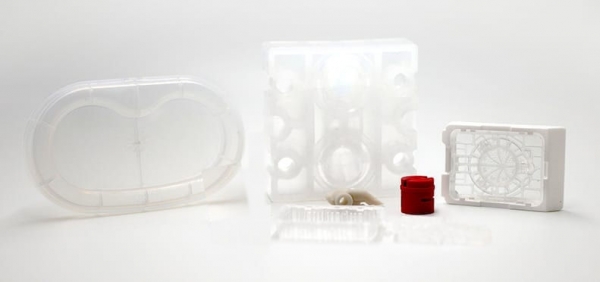
At Pexco, we don’t just manufacture components — we engineer confidence. In the precision-driven world of ultra-high purity (UHP) systems, quality is not merely a competitive advantage — it’s a requirement. Our steadfast commitment to quality is the cornerstone of our business and the key to building long-term, trusted partnerships with customers across high-stakes industries.
We understand that our customers rely on us to deliver components that function flawlessly in the most demanding environments, especially when it comes to injection molded PFA (Perfluoroalkoxy) and PTFE (Polytetrafluoroethylene) parts. That’s why we hold ourselves to the highest performance and compliance standards — including SEMI F57 certification — to ensure our products perform with consistency, safety, and excellence.
The Value of Quality: More Than a Buzzword
As a manufacturer, the quality behind your product is the foundation for long-term success. At Performance Plastics, quality assurance is deeply embedded in every stage of our process. From design and prototyping to injection molding and final inspection, we go above and beyond industry expectations to guarantee that our customers’ products are nothing less than ideal — and often, closer to perfect.
Manufacturing high-quality products isn’t just about meeting specifications — it’s about ensuring repeatability, reliability, and compliance. These factors directly influence customer satisfaction, retention, and trust, especially in regulated industries such as semiconductor fabrication, pharmaceuticals, and chemical processing, where cleanliness and precision are paramount.
To that end, we’ve made significant investments in post-molding testing protocols that confirm compliance with stringent regulatory and process standards. One of the most critical of these standards is SEMI F57 — a specialized compliance benchmark for polymers used in ultrapure water and chemical distribution systems.
What Is SEMI F57 Compliance?
SEMI F57 is a globally recognized specification developed by SEMI (Semiconductor Equipment and Materials International) for polymer materials and components that are used in ultrapure water (UPW) and liquid chemical distribution systems, especially in semiconductor manufacturing facilities.
The standard sets strict guidelines for:
- Extractable Ions & Metallics: To prevent contamination of UHP processes, SEMI F57 limits leachable anions such as bromide, chloride, fluoride, nitrate, nitrite, phosphate, and sulfate.
- Total Organic Carbon (TOC): Elevated levels of TOC can interfere with critical manufacturing steps, especially in silicon wafer processing. SEMI F57 ensures TOC levels remain within safe limits.
- Particle Contribution: It evaluates the number and size of particles a component can introduce into a fluid stream, which can be detrimental to semiconductor yields.
- Surface Roughness: Rough internal surfaces can trap contaminants and impede cleaning, so surface smoothness is tightly regulated.
- Reliability Testing: Long-term performance under UHP conditions is assessed, simulating real-world usage scenarios.
These requirements are not theoretical — they’re essential. In semiconductor fabrication, for example, a single micron-sized contaminant can cause wafer defects that lead to catastrophic product failures and cost thousands of dollars in wasted materials.
Why SEMI F57 Matters for Our Customers
Our customers in the UHP industry depend on materials that don’t degrade, contaminate, or compromise the purity of fluid systems. For components such as injection molded PFA and PTFE parts, even minimal contamination can trigger massive downtime, failed quality audits, or ruined product batches.
Achieving and maintaining SEMI F57 compliance not only protects our customers’ processes but also demonstrates our deep understanding of material science, process control, and risk mitigation.
More importantly, it exemplifies our ability to meet the most rigorous industry requirements, giving our customers peace of mind that their components are qualified for use in the world’s most sensitive manufacturing environments
A Proactive Approach to Quality Testing
Attaining SEMI F57 compliance is not a one-time achievement — it’s a continuous process. To maintain our high standards, we’ve implemented additional quality control steps across our manufacturing workflow, specifically for PFA and PTFE injection molded products.
These enhanced quality checkpoints include:
- Molding Process Verification
During the injection molding process, we monitor key parameters to ensure process consistency and prevent material degradation. This includes controlling melt temperatures, cavity pressure, and residence time — all factors that influence contamination risk and structural integrity. - Advanced Cleaning Protocols
Post-molding cleaning ensures that no external contaminants remain on the surface. Our cleaning stations utilize deionized water and cleanroom-grade procedures to prepare parts for high-purity applications. - Precision Drying Techniques
Drying is conducted in controlled environments to eliminate residual moisture and particles that could interfere with SEMI F57 test results or final application performance. - Cleanroom Packaging
We use ISO-compliant cleanroom conditions to package products, preventing re-contamination after testing and maintaining purity through final delivery. - Final Inspection and Documentation
Each product batch undergoes comprehensive quality testing, including surface roughness measurements, particle analysis, and chemical leachate testing. Documentation is provided to verify SEMI F57 compliance and traceability.
By embedding these quality assurance checkpoints into our process, we ensure that every molded component shipped by Pexco meets or exceeds SEMI F57 standards — not just in theory, but in practical, documented reality.
Building Confidence Through Compliance
Building Confidence Through Compliance
When you partner with Pexco, you’re not just buying parts — you’re investing in unmatched reliability, material expertise, and long-term performance.
Our team understands that each customer has unique compliance needs, and we work collaboratively to tailor our production and testing methods accordingly. Whether your project involves custom PFA fittings, PTFE fluid connectors, or specialized components for a proprietary UHP system, our engineers will help ensure that every aspect of the design and manufacturing process supports SEMI F57 certification.
In fact, our ability to achieve SEMI F57 compliance for a recent customer’s PFA product is a testament to both our technical capabilities and our proactive customer service philosophy. We see challenges as opportunities to excel — and quality as a promise we’re proud to keep.
Partner with Pexco
If your products operate in an environment where contamination isn’t an option, Pexco is your trusted partner. We’re ready to assist with:
- Evaluating material compatibility for UHP applications
- Designing injection molded components for SEMI F57 compliance
- Implementing specialized testing and documentation protocols
- Scaling high-purity manufacturing without compromising quality
Let us help you elevate your product performance — and your peace of mind.
For more information on Pexco’s Injection Molding & Extrusion capabilities,
please request information at pexco.com/contact-us.