

Fluoropolymers serve as a foundation for the manufacture of vital components in semiconductor
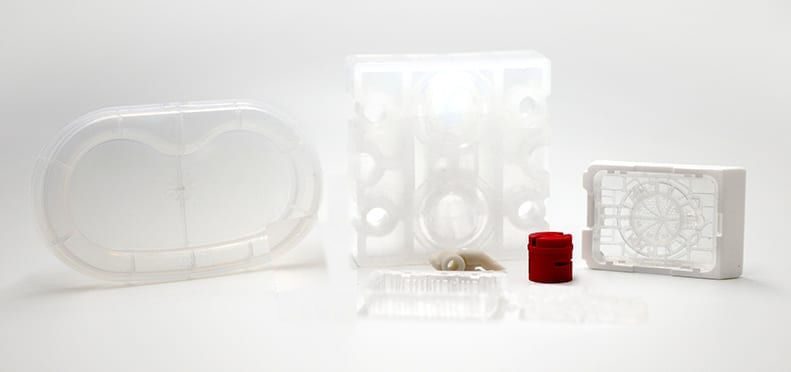
The semiconductor industry is driven by technological innovation, precision engineering, and the highest for material performance. As devices become smaller, faster, and more complex, the materials used in manufacturing must deliver exceptional durability, chemical resistance, and purity. Among these, fluoropolymers stand out as a cornerstone for producing critical components in semiconductor equipment.
At Pexco, we specialize in high-performance extrusion and molding of fluoropolymers—supporting the semiconductor industry’s need for reliability and innovation. In this article, we explore the role of fluoropolymers, the manufacturing techniques behind them, and how advanced processing technologies are revolutionizing component design for this fast-paced industry.
What Are Fluoropolymers?
Fluoropolymers are a unique class of thermoplastic polymers made from fluorine and carbon bonds, giving them a combination of properties rarely found in other materials. The first and most well-known fluoropolymer, PTFE (Polytetrafluoroethylene), was discovered in the 1930s and is widely known under the trade name Teflon. Since then, several other fluoropolymers have been developed, each suited to specific applications.
Common Types of Fluoropolymers Used in Semiconductors:
- PFA (Perfluoroalkoxy Alkane) – Offers excellent chemical resistance and high purity.
- FEP (Fluorinated Ethylene Propylene) – Known for melt-processability and transparency.
- PVDF (Polyvinylidene Fluoride) – Semi-crystalline with good mechanical properties.
Fluoropolymers are ideal for semiconductor environments because of their:
- Resistance to Chemicals – Essential for handling acids and solvents used in chip fabrication.
- Thermal Stability – Tolerate high-temperature environments typical of processing systems.
- Low Friction and Anti-Adhesion – Reduce material buildup, improving cleanliness.
- Dielectric Properties – Ensure insulation in sensitive electronic systems.
- Low Outgassing and Non-Leaching – Prevent contamination in cleanrooms and ultrapure water systems.
Key Applications in Semiconductor Manufacturing
The physical and chemical integrity of components is crucial throughout every phase of semiconductor production—from wafer etching and deposition to testing and packaging. Fluoropolymers are used in:
- Seals and Gaskets – Providing leak-proof, chemical-resistant barriers in valves and process chambers.
- Tubing and Piping Systems – Transporting reactive gases and chemicals with minimal risk of contamination.
- Wire and Cable Insulation – Ensuring high dielectric strength in cleanroom-controlled environments.
- Bearings and Bushings – Supporting moving parts in wafer handling systems with low friction.
- Wafer Carriers and Chip Trays – Maintaining part geometry and preventing electrostatic damage.
These components must perform without degradation even in environments with aggressive chemicals and extreme temperatures. That’s where manufacturing technique becomes as critical as the material itself.
Advanced Manufacturing Techniques: Molding and Extrusion
Fluoropolymers, while offering superior performance characteristics, can be difficult to process due to their high melting points and chemical inertness. However, with the right expertise and technology, these challenges are surmountable.
Injection Molding for Precision Components
Injection molding is one of the most effective ways to produce complex fluoropolymer components with tight tolerances.
How it works:
- Resin pellets are melted and injected into a custom-designed mold.
- The molten material fills the cavity under high pressure.
- After cooling, the solid part is ejected and ready for use.
This technique is perfect for fabricating small, detailed parts that require dimensional accuracy, such as fittings, manifolds, and chip holders. PFA and FEP are particularly well-suited for this method due to their melt-processable nature.
Advantages:
- High repeatability and consistency
- Suitable for large production volumes
- Enables the creation of complex geometries
Profile and Tube Extrusion: Customization and Continuous Production
For longer or continuous parts like tubing and profiles, extrusion is the method of choice. Pexco’s extrusion capabilities are uniquely designed to meet the semiconductor industry’s demand for cleanliness, reliability, and customization.
Profile Extrusion shapes melted resin into a fixed cross-section—ideal for seals, gaskets, and protective guards. Tube Extrusion is used to produce hollow structures like chemical delivery tubes and flexible conduits.
Advanced Techniques in Extrusion
- Precision Die Design: Computer-modeled tooling ensures exact dimensions and tight tolerances.
- In-Line Processing: Secondary operations like punching, cutting, or marking are performed during extrusion, increasing efficiency.
- Micro-Extrusion: Supports tubing with internal diameters as small as a few hundred microns, ideal for microfluidic and sensor applications.
- High-Speed Cooling Systems: Maintain shape integrity during rapid production cycles.
- Multi-Layer Extrusion: Combines materials in a single profile, such as a chemically resistant outer layer with a flexible inner core.
Co-Extrusion and Multi-Layered Innovation
In environments that require specialized performance, co-extrusion and tri-extrusion technologies allow Pexco to produce multi-functional components by combining different materials into a single part.
- Co-Extrusion: Two materials are extruded simultaneously to achieve hybrid properties. For instance, combining PTFE and PE may balance chemical resistance with cost-efficiency.
- Tri-Extrusion: Adds a third layer, useful for applications demanding added structural support, thermal management, or aesthetic customization.
This layering can add:
- Barrier Protection against moisture, oxygen, or UV rays
- Color Coding for tubing used in complex gas or fluid systems
- Integrated Functionality (e.g., rigid/flexible zones within a single part)
Crosshead Extrusion for Electrical Applications
Crosshead extrusion is a specialized technique used for applying insulation or jacketing to wires and cables—a common requirement in cleanroom environments and process control systems.
In this process, the extruded material is applied perpendicularly to the cable core as it moves through the tooling. This ensures uniform wall thickness and high-quality insulation, meeting strict electrical and mechanical performance standards.
Common uses include:
- Telecommunication cabling
- Semiconductor equipment wiring
- High-temperature control wiring
Our Expertise Includes:
- Cleanroom-compatible manufacturing processes
- Material selection assistance for optimal performance
- Custom tooling and design services
- Decades of experience with fluoropolymers and high-performance thermoplastics
Whether you need simple PTFE tubing or a tri-layer profile engineered for reactive gas transfer, we deliver high-performance solutions that meet your specifications—on time and on budget.
Partner With Us
Fluoropolymers are not just materials—they are enablers of technology in one of the most demanding and fast-moving industries in the world. With advanced processing techniques like injection molding, profile extrusion, co-extrusion, and micro-extrusion, Pexco helps semiconductor manufacturers gain a competitive edge through superior component performance.
Contact us at 770-777-8540 or visit pexco.com/ to learn more about how we can assist with your next extrusion or molding project tailored to semiconductor-grade requirements.