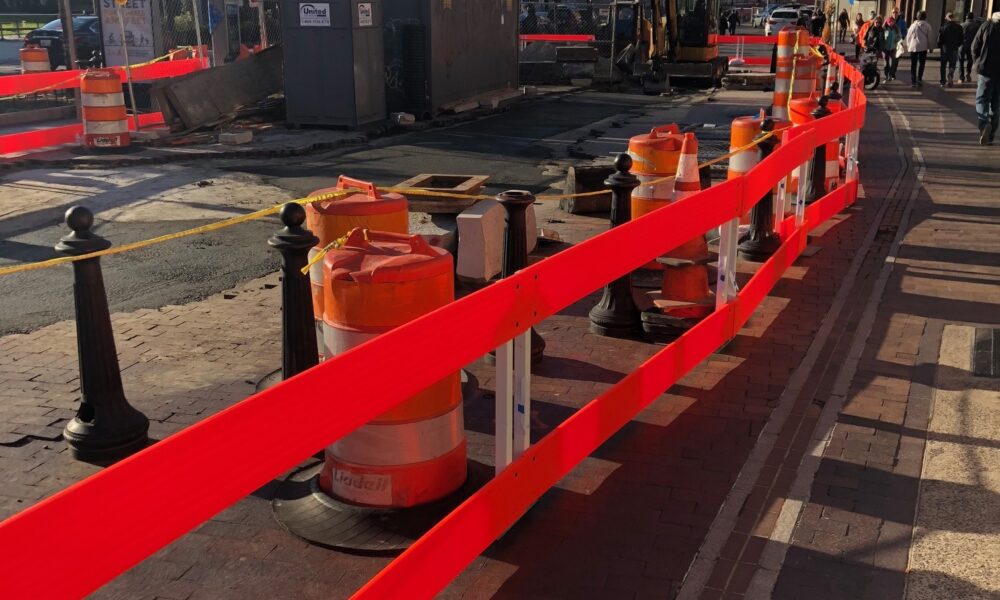

TPAR Barricade: The Ideal Choice for Utility Work Zones
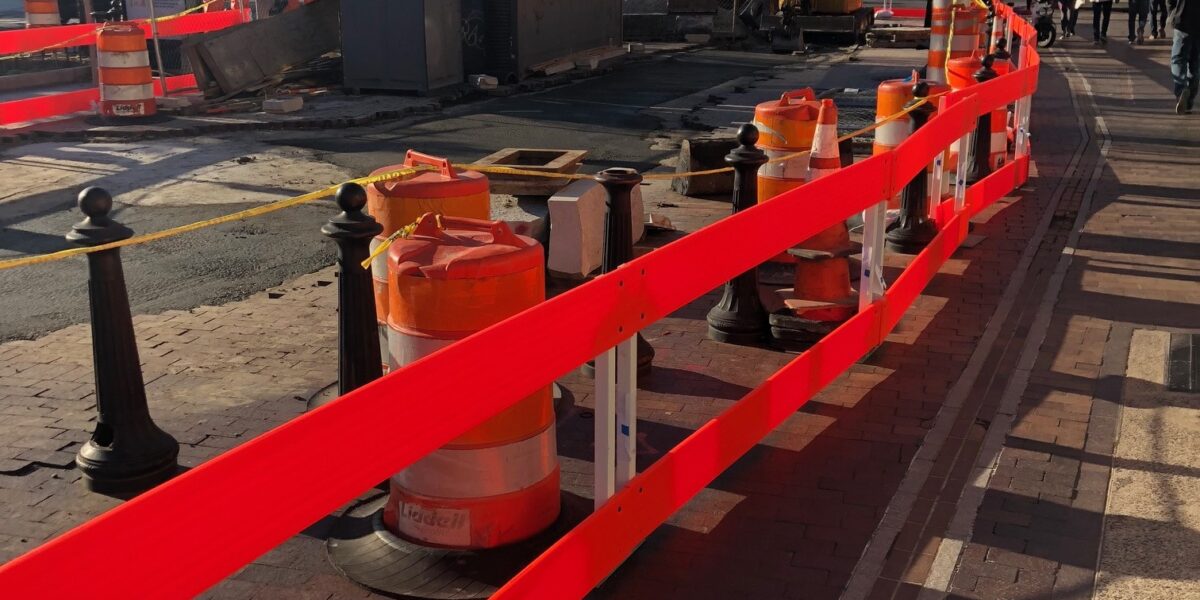
Why the Pexco TPAR Barricade Meets NEW Utility Work Zone Standards
Utility work zones are unlike typical construction sites. Crews are often operating in tight urban corridors, active sidewalks, and high-traffic public areas while maintaining or repairing essential services such as electric power, natural gas, steam supply, water distribution, and sewage systems. In these environments, safety, compliance, durability, and efficiency are critical.
That’s why more utility contractors and public works teams are turning to the Pexco Temporary Pedestrian Access Route (TPAR) Barricade as their preferred traffic safety solution for pedestrian channelization and containment.
The TPAR is specifically engineered to meet the unique demands of essential utility service projects, delivering both regulatory compliance and practical field performance.
Built for Essential Utility Services
Utility projects frequently require temporary sidewalk closures, pedestrian rerouting, and the separation of restricted-access zones. Whether crews are accessing a manhole, repairing a hydrant, trenching for gas lines, or servicing underground electrical systems, maintaining safe and continuous pedestrian flow is essential.
The TPAR Barricade was designed with these exact challenges in mind. The temporary barricade provides continuous, positive guidance for pedestrians while allowing crews to maximize usable workspace inside the work zone. The TPAR supports safe pedestrian channelization during maintenance and construction activities without compromising operational efficiency.
Its slim profile and modular design make it particularly effective in dense urban settings where sidewalk space is limited, and public access must be preserved.
Fully Compliant with Updated MUTCD Regulations
Regulatory enforcement has evolved, and utility contractors must evolve with it.
Recent enforcement of MUTCD Sections 6K.02 and 6K.10 now requires updated pedestrian channelizing devices for sidewalk closures and detours. The TPAR Barricade is fully compliant with these updated MUTCD standards.
Pedestrian channelizing devices will also require identification marking. The TPAR supports print directly on the boards, enabling compliance and clear project identification. This allows utility providers to meet regulatory marking requirements and improve public communication, all while reinforcing brand visibility during infrastructure projects.
In addition, the TPAR meets MASH-16 TL3 (WZ-418) requirements, further reinforcing its readiness for regulated work zones.
For utility contractors, this means reduced risk of inspection failure, confidence in meeting updated enforcement standards, and a future-ready pedestrian control solution.
Designed for Accessibility and Public Safety
Utility work frequently occurs in ADA-sensitive environments such as city sidewalks, transit corridors, and commercial districts. The TPAR’s safety-forward design supports full pedestrian accessibility with barricade features like a smooth, hand-guided top rail for continuous guidance, a detectable lower edge for pedestrians using canes, and zero protrusions into the walkway, eliminating trip hazards.
This continuous guidance design is essential in maintaining safe passage around open excavations, utility boxes, trenching operations, and exposed infrastructure components.
Rather than acting as a simple visual warning, the TPAR creates a defined and accessible pedestrian pathway. Making the TPAR a multifaceted solution to modern MUTCD requirements.
Smarter Alternatives
As enforcement tightens, utility contractors are finding that traditional barricades may no longer meet pedestrian continuity standards for sidewalk closures.
The TPAR provides a structured, continuous channelizing system rather than a segmented obstruction. This makes it particularly effective for long-term utility repairs, multi-day infrastructure projects, downtown corridor maintenance, large-scale water or sewer rehabilitation work, and much more.
With 4-foot and 6-foot standard lengths (and custom lengths available), crews can build continuous runs that maintain flow and visibility while protecting both the public and the work area.
When a TPAR corridor deployed, consider pairing the installation with our O-Frame Barricades. Our O-Frames are also designed for low-speed applications including crowd control, parking control, and plank box utility closures. They are ideal for cordoning off an area during public events, making them perfect for joining alongside a TPAR path to indicate detour direction, an ending path, or additional visibility for utility enclosures.
Compact, Nestable, and Field-Ready
Utility crews operate on tight timelines. Equipment must deploy quickly, transport easily, and store efficiently.
The built TPAR sections are compact and nestable, allowing them to fit efficiently on service trucks or in yard storage. This nesting capability reduces transport volume and simplifies logistics for teams managing multiple site deployments.
In addition, the system features pre-drilled X-tube posts and a tool-friendly design that allows crews to assemble and deploy barricades in minutes. This is especially valuable when responding to emergency utility calls where rapid setup is required to secure a site.
Quick assembly means less downtime during mobilization, faster sidewalk redirection, and improved response times in repairs.
Durable Enough for Demanding Utility Conditions
Utility environments are rarely gentle. Barricades may be exposed to heavy equipment, weather extremes, moisture, and repeated deployment cycles.
The TPAR’s 1” x 8” panels are constructed from UV-stabilized composite materials that won’t splinter, rot, crack, or corrode, even under harsh conditions or long-term field use.
For utilities managing long-duration infrastructure upgrades or recurring maintenance zones, this durability translates into lower replacement costs, longer product life cycles, and consistent performance across projects.
Multi-Purpose Function: Walkway Barrier and Utility Enclosure
One of the most valuable advantages of the TPAR in utility applications is its dual functionality.
Beyond pedestrian channelization, the TPAR can be reconfigured into a secure, box-style enclosure. Utility teams can quickly create containment areas for elements such as in-use materials such as pipes and cable spools, tools and equipment, hazardous or sensitive work areas, and restricted access points.
Using the TPAR as a utility enclosure improves jobsite organization, protects equipment from pedestrian interference, and limits public liability by clearly blocking hazardous areas with a highly visible and durable barrier.
Unlike temporary fencing or improvised containment methods, the TPAR system deploys quickly, maintains a compact footprint, and offers a streamlined, multi-functional solution that maximizes return on investment.
For utilities managing complex or high-visibility projects, this flexibility is a major operational advantage.
The Utility Market Standard Moving Forward
Utility work zones demand more than basic barricades. They require regulatory compliance, ADA accessibility, durability under harsh conditions, operational efficiency, and versatility for containment and channelization.
The Pexco TPAR Barricade delivers on all fronts.
Proudly made in the USA and backed by decades of experience in traffic control and pedestrian safety. The TPAR provides utility contractors and public works teams with a regulation-ready, “tested and proven” solution for modern infrastructure demands.
As MUTCD enforcement continues to tighten and public safety expectations rise, the TPAR is not just a compliant choice, it is the ideal choice for utility work zones.
Interested in speaking with an expert or learning more on your own?
Use the Contact Us form to get in touch and download the TPAR Utility Work Zone Application information sheet for more: Pexco TPAR Utility Work Zone Applications Information Sheet