PTFE Applications Across Industries
PTFE Uses in Chemical, Aerospace, Medical & Industrial Sectors
PTFE (polytetrafluoroethylene) is one of the most chemically resistant polymers commercially available—and one of the most versatile. With a service temperature range from -410°F to 500°F, one of the lowest coefficients of friction of any solid material, and near-total chemical inertness, PTFE shows up in applications where no other material can survive the operating environment.
This guide covers where PTFE is used across major industries, what properties drive material selection in each case, and what product forms are available for different application requirements.
Why PTFE Gets Specified
Before getting into specific industries, it’s worth understanding the properties that make PTFE the default choice when standard plastics, metals, and elastomers fall short.
Chemical inertness. PTFE resists virtually all industrial chemicals, solvents, and acids—including hydrofluoric acid, aqua regia, and concentrated caustics that attack stainless steel. Only molten alkali metals and certain fluorinating agents at elevated temperature and pressure will degrade it.
Temperature range. Continuous service from -410°F to 500°F (short-term to 550°F) gives PTFE one of the broadest operating envelopes of any fluoropolymer. It remains flexible at cryogenic temperatures where most polymers become brittle, and maintains structural integrity at temperatures that would degrade polyolefins, nylons, and most standard engineering thermoplastics.
Low friction. PTFE has the lowest coefficient of friction of any solid polymer, making it ideal for bearing surfaces, sliding seals, and any application where lubrication is impractical or prohibited.
Electrical properties. High dielectric strength, low dissipation factor, and stable electrical characteristics across a wide temperature and frequency range make PTFE a standard insulation material in high-performance electrical and electronic systems.
FDA compliance. Virgin PTFE meets FDA 21 CFR 177.1550 for food contact applications—no special formulation required.
Non-flammable and non-toxic. UL 94 V-0 rated. PTFE will not sustain combustion and does not promote flame spread.
Chemical Processing
Chemical processing is where PTFE’s chemical resistance delivers the most value. In environments where concentrated acids, caustic solutions, and aggressive solvents are the norm, PTFE is often the only polymer—and sometimes the only material—that will hold up.
Liners and vessels. PTFE-lined pipes, vessels, and columns protect carbon steel infrastructure from corrosive media. PTFE film and sheets are used as liner material in tanks and reactor vessels handling HCl, H₂SO₄, HF, and mixed-acid processes.
Gaskets and seals. Seals, gaskets, and bushings machined from molded PTFE sheets or rod stock provide reliable sealing in flanged connections carrying corrosive fluids. PTFE gaskets maintain seal integrity across the full temperature range without the chemical compatibility concerns of elastomeric gaskets.
Valve seats and packing. PTFE’s combination of chemical resistance, low friction, and dimensional stability makes it the standard material for valve seats, stem packing, and diaphragms in chemical service. Pexco engineers application-specific PTFE valve seals that balance conformity, stiffness, and durability—including carbon-graphite filled PTFE for high-cycle, high-load valve applications and glass-filled PTFE where improved tensile strength and reduced creep are required. Virgin PTFE formulations remain the standard for corrosive and FDA-regulated service.
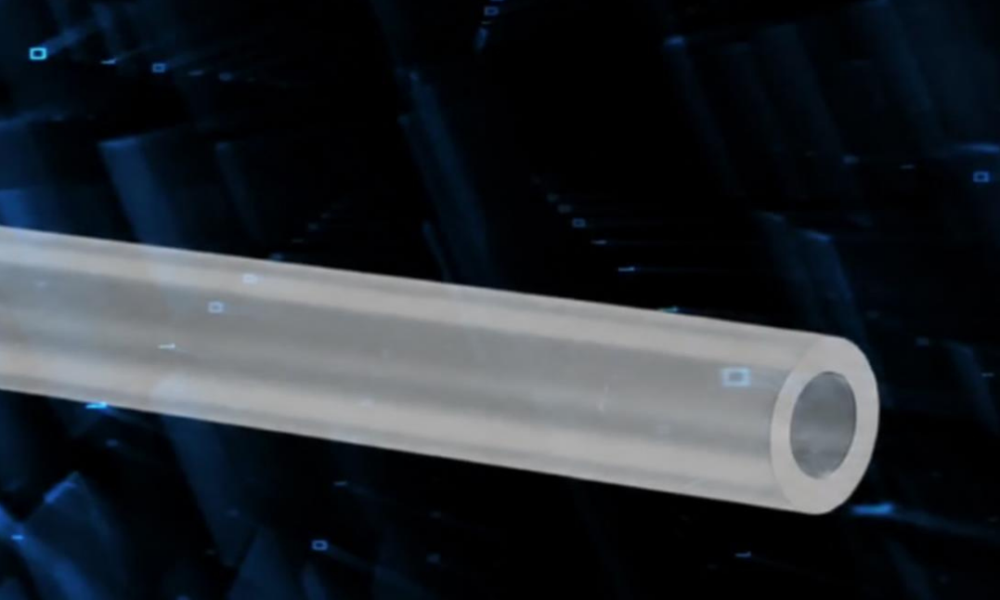
Tubing and fluid transfer. Extruded PTFE tubing handles sample lines, reagent delivery, and instrument connections where contamination or chemical attack would compromise process control. The smooth, non-stick bore surface resists residue buildup and simplifies cleaning.
Semiconductor
Semiconductor fabrication demands materials that won’t introduce contamination into ultra-pure process environments. PTFE meets that requirement across multiple fab applications.
Ultra-high purity fluid handling. Fluoropolymer tubing is the standard for semiconductor chemical distribution—DI water, CMP slurries, and wet etch chemistry all require materials that won’t introduce contamination. Pexco’s ultra-high purity offering for semiconductor is PFA-based (Altaflo 480 UHP PFA, tested to SEMI F57), but PTFE also serves semiconductor fab environments for chemical delivery lines, drain systems, and applications where PFA’s transparency or flexibility aren’t required.
Wafer handling and wetted components. PTFE’s low particle generation, non-stick surface, and chemical inertness make it suitable for wafer carriers, chucks, fixturing, and wetted parts in process tools where metal contamination is unacceptable.
Chemical delivery system components. Valve bodies, fittings, and manifold components machined from PTFE rod and cylinder stock handle the aggressive chemistries—sulfuric, hydrofluoric, phosphoric—used in etch and clean processes.
Medical and Life Sciences
PTFE’s biocompatibility, chemical inertness, and lubricity have established it as a standard material in medical and life sciences applications, from surgical instruments to implantable devices.
Catheter liners and guide wire coatings. PTFE’s low friction provides the lubricity required for catheter insertion and guide wire navigation. The material’s biocompatibility and resistance to bodily fluids make it suitable for blood-contact applications.
Surgical instrument components. PTFE bushings, bearings, and sliding surfaces in surgical instruments provide smooth, lubricant-free operation that can withstand repeated autoclave sterilization cycles.
Laboratory equipment. PTFE tubing, stopcock plugs, stir bars, and container linings are standard in analytical and research laboratories where chemical purity and inertness are non-negotiable. The non-stick surface prevents sample adsorption that would compromise analytical accuracy.
Aerospace and Defense
Aerospace and defense applications subject materials to extreme temperature swings, aggressive fluids, and demanding reliability requirements, all areas where PTFE’s property envelope excels.
Wire and cable insulation. PTFE tapes and extruded PTFE tubing provide primary wire insulation in aircraft, spacecraft, and military electronics. PTFE insulation maintains dielectric integrity from cryogenic temperatures in unpressurized fuselage sections to engine-compartment heat, a temperature swing that would crack or melt most other insulation materials.
Fuel system components. PTFE seals, O-rings, and hose liners handle jet fuel, hydraulic fluids, and de-icing chemicals without swelling, hardening, or degrading. The broad chemical compatibility eliminates the need to match seal material to each specific fluid in complex fuel and hydraulic systems.
Bearing and bushing applications. PTFE-based bearing materials, including glass-filled and carbon-filled PTFE compounds, provide self-lubricating, low-wear performance in flight control linkages, landing gear bushings, and actuator bearings where re-lubrication is impractical.
Infrastructure
Bridge design demands materials that can handle constant vibration, thermal cycling, and heavy loading without maintenance, and PTFE delivers on all three.
Bridge bearings. PTFE is the preferred sliding surface in structural bridge bearings, where it sits between steel plates at the interface of the superstructure and substructure. Its low coefficient of friction allows controlled movement from traffic vibration, seismic activity, and thermal expansion, while its resistance to moisture, weathering, and temperature extremes ensures decades of maintenance-free service. Bridge bearings, also called structural bearings, load bearings, or bearing pads, are manufactured from skived rolls, skived sheets, and molded PTFE sheets in both virgin and filled PTFE grades.
Filled grades for high-load applications. Glass-filled PTFE (15% and 25%) and carbon-filled PTFE (25%) provide enhanced wear resistance and dimensional stability under the sustained compressive loads that bridge bearings experience. These filled compounds reduce creep while maintaining PTFE’s low-friction sliding performance. Additional processing, including dimpling and etching, improves bonding to steel backing plates.
Standards and specifications. Bridge bearing design follows ASTM, AASHTO, and European Norms (EN 1337) specifications. Seals, gaskets, and bushings and other machined PTFE components for infrastructure applications are available from Pexco’s Enflon product line.
Food Processing
Virgin PTFE’s FDA compliance (21 CFR 177.1550), non-stick surface, and ease of cleaning make it a natural fit for food processing equipment, particularly in high-temperature and chemically aggressive environments.
Conveyor and guide components. PTFE slide rails, guide strips, and wear pads reduce friction in conveyor systems while maintaining food-contact compliance. The non-stick surface prevents product adhesion and simplifies washdown.
Bakery and confectionery. PTFE-coated and solid PTFE components handle dough release, mold release, and high-temperature baking applications where non-stick performance is critical and the operating environment exceeds what other FDA-compliant polymers can handle.
Seals and gaskets in CIP systems. Clean-in-place (CIP) systems use hot caustic and acid wash cycles that degrade standard elastomeric seals. PTFE gaskets and seals maintain integrity through repeated CIP cycles without degradation, extractables, or flavor transfer.
Choosing the Right PTFE Product Form
PTFE is available in a range of product forms matched to different application requirements. Pexco manufactures PTFE products across multiple form factors through its Enflon and Altaflo product lines:
Tubing — Extruded PTFE tubing for fluid transfer, instrumentation, and electrical sleeving. Altaflo 100 PTFE is available in industrial, custom, heavy wall, and metric sizes with 100% virgin grade resin.
Sheets and film — Molded PTFE sheets and PTFE film for liners, gaskets, dielectric layers, and chemical-resistant surfaces. Available etched one-side or two-side, or with pressure-sensitive adhesive backing.
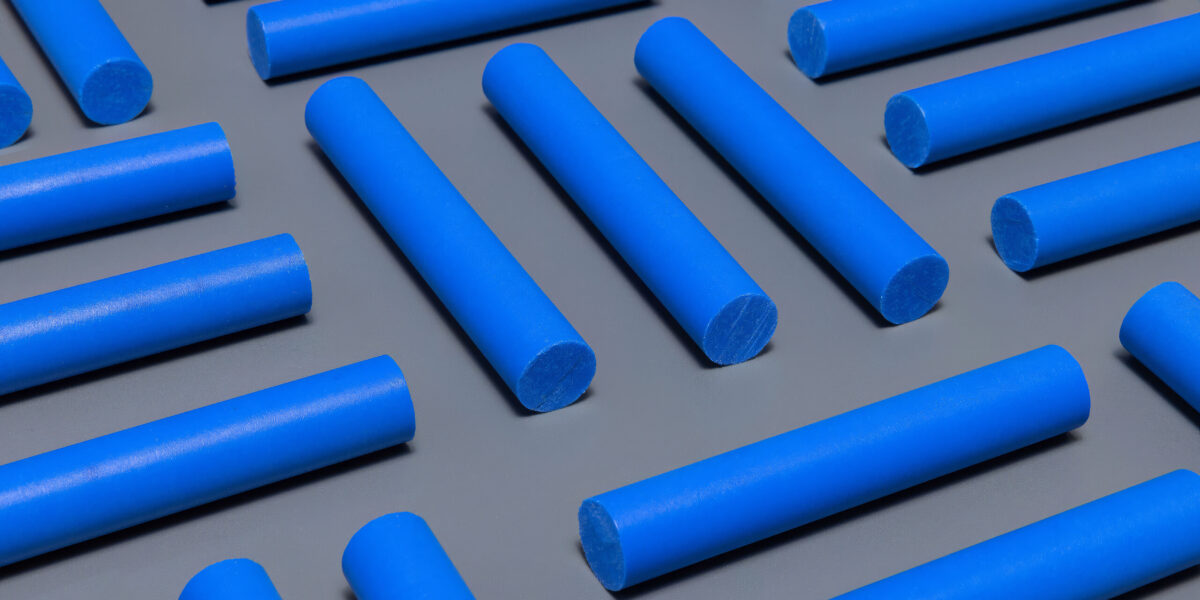
Rods and cylinders — Molded and extruded rod stock for machining seals, bushings, valve seats, and custom components. Enflon molded rods available from 1.25” to 20.5” OD; molded cylinders to 34.5” OD.
Tapes — Skived PTFE tape for electrical insulation, pipe thread sealing, and surface protection. Available with adhesive backing.
Resins — Virgin, premium, high-performance, modified, and reprocessed grades available. Filled compounds (glass, carbon, graphite, bronze) available for enhanced wear resistance, dimensional stability, or thermal conductivity.
Interested in speaking with an expert or learning more on your own?
Pexco manufactures PTFE products through its Enflon and Altaflo product lines, serving chemical processing, semiconductor, medical, aerospace, infrastructure, and food processing applications across North America. Enflon is ISO 9001:2015 certified with ROHS, REACH, and Conflict Mineral compliance.
Contact our engineering team to discuss your PTFE application requirements. Use the Contact Us form to get in touch.