Fluoropolymer Injection Molding: The Complete Guide to Materials, Manufacturing, and Medical Applications

High-Performance Injection Molding for Medical, Semiconductor, and High-Purity Applications
Medical devices, semiconductor manufacturing equipment, laboratory instruments, and chemical processing systems all depend on plastic components that can withstand aggressive chemicals, repeated sterilization, elevated temperatures, and demanding operating environments. Selecting both the right material and the right manufacturing process is essential to achieving long-term performance, regulatory compliance, and product reliability.
Fluoropolymer injection molding enables manufacturers to produce complex, precision components from advanced materials such as PFA and FEP that deliver exceptional chemical resistance, thermal stability, and purity. While these materials provide significant performance advantages, they are also among the most challenging polymers to process, requiring specialized equipment, tooling, and engineering expertise.
Pexco’s Cincinnati, Ohio manufacturing facility — built on more than four decades of precision-molding experience dating back to Performance Plastics’ founding in 1982 — specializes in injection molding advanced fluoropolymers, including PFA, FEP, PVDF, UHP PFA, and ETFE, and utilizes direct gating technology to reduce material waste and maximize efficiency when processing these high-value resins. The facility supports customers operating under ISO 13485 quality requirements, USP Class VI biocompatibility testing, and FDA regulatory submissions for customers manufacturing regulated medical components.
Key Takeaways
- Fluoropolymer injection molding produces high-performance components for demanding medical, semiconductor, life science, and industrial applications.
- PFA and FEP are the most common fluoropolymers used in injection molding because they combine excellent chemical resistance with melt-processability; PVDF and ETFE are also viable for specific applications.
- Direct gating can reduce expensive fluoropolymer resin waste by an estimated 20% to 40% while improving manufacturing efficiency and part consistency.
- Material selection, tooling design, and process expertise all play critical roles in successful fluoropolymer molding.
- Pexco’s Cincinnati facility supports customers operating under ISO 13485 quality requirements, USP Class VI biocompatibility testing, and FDA regulatory submissions for medical device manufacturers, and provides engineering support from material selection through production.
Why Choose Fluoropolymer Injection Molding?
Engineers rarely begin a project by asking, “What manufacturing process should I use?” Instead, they ask:
- Will the material withstand harsh chemicals?
- Can it survive repeated sterilization?
- Will it maintain dimensional stability at elevated temperatures?
- Is it suitable for high-purity fluid handling?
- Can it be manufactured consistently at production volumes?
Fluoropolymer injection molding answers these questions by combining advanced material performance with the repeatability and scalability of precision injection molding.
Compared to conventional engineering plastics, fluoropolymers offer:
- Outstanding chemical resistance
- Excellent thermal stability
- High dielectric strength
- Low coefficient of friction
- Low surface energy
- Long service life in aggressive environments
These properties make fluoropolymers the preferred choice when failure is not an option.
What Is Fluoropolymer Injection Molding?
Fluoropolymer injection molding is a manufacturing process that injects molten fluoropolymer resin into precision tooling to create complex, repeatable components.
Unlike standard thermoplastics, fluoropolymers require:
- Higher melt temperatures
- Specialized corrosion-resistant processing equipment
- Precision tooling
- Advanced process controls
- Experienced manufacturing personnel
The result is a finished component capable of performing in environments where conventional plastics may fail.
What Is Direct Gating?
Direct gating is a specialized molding technique that delivers molten resin directly into the finished component while minimizing runner systems.
For expensive fluoropolymer materials such as PFA and FEP, direct gating offers several advantages:
- Reduced resin waste
- Higher production yield
- Lower manufacturing costs
- Improved process consistency
- Greater sustainability through reduced material consumption
Because fluoropolymer resins represent a significant investment, reducing unnecessary waste can have a meaningful impact on total production cost — direct gating has been shown to reduce fluoropolymer material costs by 20% to 40% in production applications.
Case Study: Compliant PFA Component Delivered in 60 Days
A diagnostic lab equipment manufacturer needed a highly complex, thin-walled PFA component — with features as small as 0.20 mm and walls as thin as 0.30 mm — to automate a critical manual process. Other high-end molders were unable to produce the part. Pexco engineered a hot-runner mold designed to reduce shear, applied proprietary metallurgy resistant to fluorine-gas corrosion, and used a direct-gated, multi-cavity tool to eliminate the sprue and runner. The result: a compliant part delivered within 60 days, meeting the customer’s cost target.
When Should Engineers Choose Injection Molding?
Several manufacturing methods are available for high-performance polymers, each with distinct advantages.
| Manufacturing Process | Best For | Considerations |
| Injection Molding | High-volume precision components | Excellent repeatability, low cost per part at production volumes |
| Machining | Low-volume production, prototypes, complex features | Higher material waste and longer production times |
| Compression Molding | PTFE and certain specialty fluoropolymers | Limited design flexibility compared to injection molding |
| Extrusion | Continuous tubing, rod, and profiles | Not suitable for complex three-dimensional parts |
Injection molding becomes the preferred manufacturing method when production volumes increase, tight tolerances are required, or complex geometries must be produced consistently.
For applications that require near-final dimensions straight out of the mold, Pexco also offers net shape molding, which combines iterative tool design with industrial CT scanning to hold tolerances as tight as ±0.0003 in. on complex fluoropolymer geometries — reducing or eliminating secondary machining.
Which Fluoropolymer Material Is Right for Your Application?
Material selection depends on the application’s operating environment, performance requirements, and manufacturing goals.
| Requirement | Recommended Material |
| Highest chemical resistance | PFA |
| Transparent fluid path | FEP |
| High mechanical strength | PEEK |
| Lowest friction | PTFE |
| High-purity fluid handling | PFA or UHP PFA |
| Repeated sterilization | PFA or PEEK |
| UV and weathering resistance | PVDF or ETFE |
PFA
PFA combines exceptional chemical resistance with excellent processability and is widely used in medical devices, semiconductor fluid handling systems, laboratory instrumentation, and analytical equipment. Ultra-high-purity (UHP) and high-purity (HP) PFA grades are also available for the most demanding fluid-purity requirements.
FEP
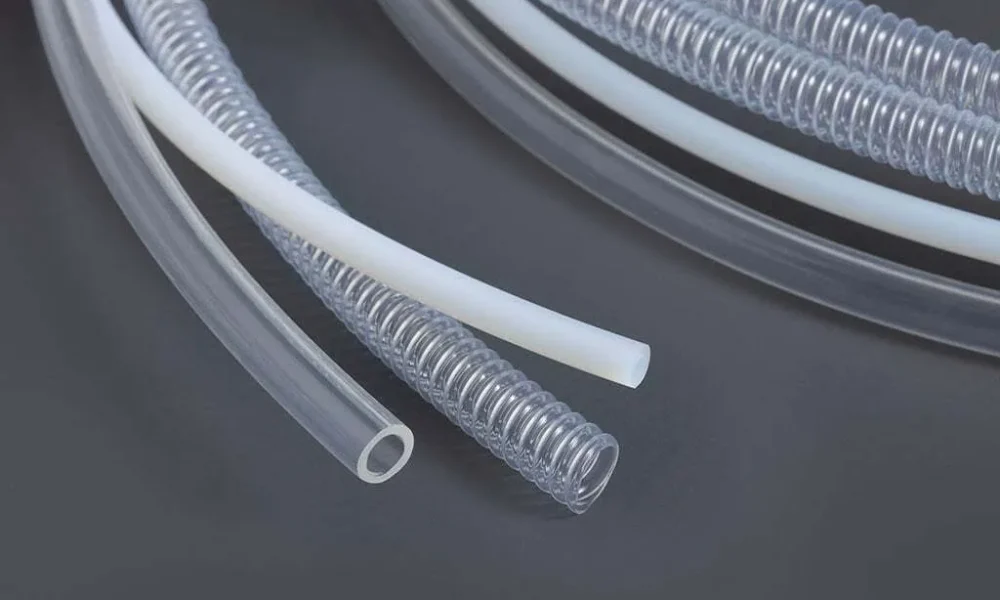
FEP provides outstanding chemical resistance with the added advantage of transparency, making it ideal for fluid transfer applications where visual inspection is beneficial.
PVDF
PVDF offers strong chemical resistance, mechanical strength, and weatherability, and is frequently selected for chemical processing and fluid handling components that must withstand outdoor or UV exposure.
ETFE
ETFE combines good chemical resistance with high mechanical strength and toughness relative to other fluoropolymers, making it a candidate for components that must resist abrasion or impact in addition to chemical exposure.
PEEK
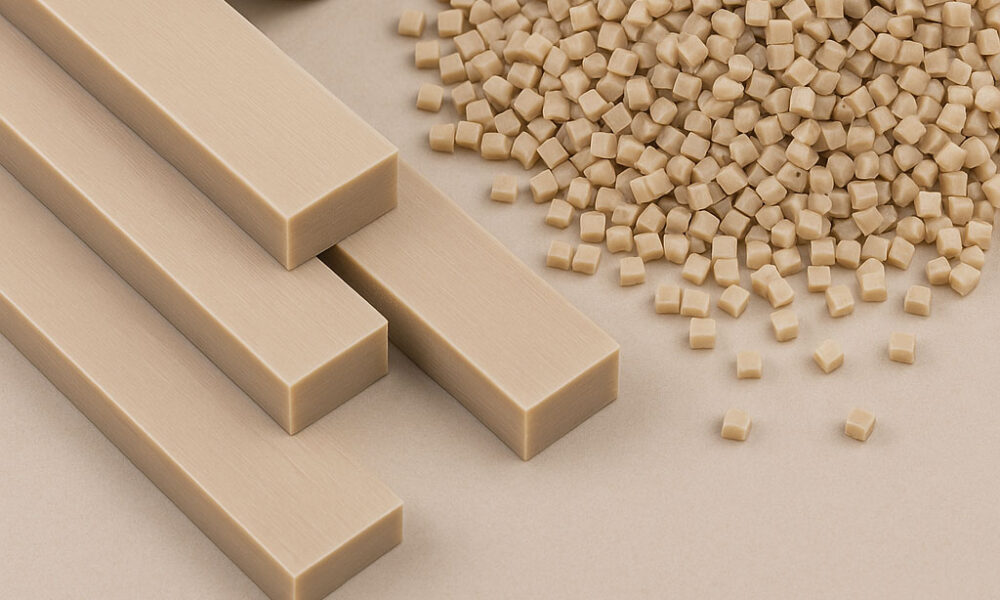
Although not a fluoropolymer, PEEK is frequently evaluated alongside fluoropolymers because of its exceptional strength, wear resistance, and sterilization compatibility.
PTFE
PTFE offers unmatched chemical resistance and low friction but generally cannot be processed using conventional injection molding. Instead, it is typically compression molded or machined.
Why Is Fluoropolymer Injection Molding So Challenging?
Advanced fluoropolymers demand specialized manufacturing capabilities.
High Melt Temperatures
Fluoropolymers require significantly higher processing temperatures than commodity plastics, placing greater demands on molding equipment and tooling.
Corrosive Off-Gassing
Certain fluoropolymers generate corrosive byproducts — including hydrofluoric acid — during processing, which can rapidly degrade conventional mold steels and lead to dimensional instability and premature tool failure. This requires corrosion-resistant barrels, screws, mold steels, and ventilation systems.
Tool Design
Gate location, venting, cooling, and mold design all influence dimensional stability, part quality, and production consistency.
Process Control
Small variations in processing conditions can affect part quality, making repeatable process control essential for production success.
Applications for Fluoropolymer Injection Molding
Fluoropolymer components are used wherever long-term reliability and chemical resistance are critical.
Medical Devices
Applications in medical and life science manufacturing include:
- Diagnostic equipment
- Fluid management systems
- Drug delivery devices
- Surgical instruments
- Laboratory analyzers
- Bioprocess equipment
Semiconductor Manufacturing
Fluoropolymers support semiconductor manufacturing applications including:
- Chemical delivery systems
- Wet processing equipment
- High-purity fittings
- Valve components
- Pump housings
- Fluid handling manifolds
Industrial and Chemical Processing
Additional applications include:
- Chemical transfer systems
- Analytical instrumentation
- Process equipment
- High-purity valves
- Pumps
- Custom molded components
Design Considerations for Fluoropolymer Components
Successful part design begins long before production. Key considerations include:
- Uniform wall thickness
- Proper gate placement
- Draft angles for mold release
- Material shrinkage
- Tolerance requirements
- Complex Geometries
- Assembly methods
- Chemical compatibility
- Operating temperature
- Regulatory requirements
Collaborating with manufacturing engineers early in the design process helps improve manufacturability while reducing development time and production costs.
How to Select a Fluoropolymer Injection Molding Partner
Choosing the right manufacturing partner can be as important as selecting the right material. Look for a manufacturer with experience in:
- Advanced fluoropolymer processing
- PFA and FEP injection molding
- Precision tooling
- Direct gating technology
- Material traceability
- Process validation
- Tight-tolerance molding
- Medical and high-purity applications
- Engineering support throughout product development
Why Pexco?
Pexco combines specialized fluoropolymer processing expertise with engineering support to help customers solve complex manufacturing challenges. Our capabilities include:
- Injection molding of PFA, FEP, PVDF, HP PFA, UHP PFA, and ETFE
- Experience with PEEK and other high-performance polymers
- Direct gating technology that reduces expensive resin waste by 20% to 40% — see Direct Gating
- CT-scanning and metrology systems enable verification of internal and external geometries, allowing engineering teams to optimize mold designs and achieve tight-tolerance fluoropolymer components.
- Net shape molding capable of holding tolerances to ±0.0003 in. using industrial CT scanning and metrology — see Advanced Plastic Engineering
- Support for ISO 13485 quality requirements, USP Class VI biocompatibility testing, and FDA regulatory submissions, using 100% virgin-grade resins with full material traceability
- A Cincinnati, Ohio facility built on more than four decades of fluoropolymer molding heritage — see our Cincinnati location
- Engineering collaboration during product development, including material selection, CAD modeling, and design for manufacturability (DFM)
- Precision manufacturing for medical, semiconductor, industrial, and life science applications
- Custom solutions for demanding fluid handling and high-purity environments
Whether you’re replacing machined components with molded parts, developing a new medical device, or optimizing a semiconductor fluid handling system, Pexco helps customers move from concept to production with confidence.
Ready to Discuss Your Fluoropolymer Project?
Pexco’s engineering team can help you evaluate materials, tooling, and process options for your next fluoropolymer component.
Frequently Asked Questions
Can PFA be injection molded?
Yes. PFA is specifically designed to be melt processed and is one of the most widely used fluoropolymers for precision injection molding.
Why isn’t PTFE typically injection molded?
PTFE does not flow like conventional thermoplastics when heated. It is generally manufactured through compression molding, ram extrusion, or machining.
Is PEEK a fluoropolymer?
No. PEEK is a high-performance engineering thermoplastic that is often considered alongside fluoropolymers because of its strength, chemical resistance, and sterilization capability.
What industries use fluoropolymer injection molding?
Medical devices, life sciences, semiconductor manufacturing, analytical instrumentation, chemical processing, aerospace, and industrial automation all rely on fluoropolymer components.
Why is fluoropolymer injection molding more expensive?
The combination of premium resin costs, specialized equipment, corrosion-resistant machinery, precision tooling, and advanced process controls contributes to higher manufacturing costs. However, these materials often provide lower lifetime costs through improved durability, reliability, and reduced maintenance.
What tolerances are achievable with fluoropolymer injection molding?
With net shape molding techniques, Pexco can hold tolerances as tight as ±0.0003 in. on complex fluoropolymer geometries — precise enough to eliminate most secondary machining operations. See Net Shape Molding for details.
Are fluoropolymer injection molded parts biocompatible for medical devices?
It depends on the resin grade and processing controls used. Pexco’s fluoropolymer molding processes support ISO 13485 quality requirements, USP Class VI biocompatibility testing, and FDA regulatory submissions, using 100% virgin-grade resins with full material traceability. See Fluoropolymer Molding for more detail.
Related Resources
- Fluoropolymer Molding Capabilities
- Direct Gating
- Net Shape Molding
- Case Study: Proprietary Fluoropolymer Injection Molding Process
- The Role of Fluoropolymers in Healthcare and Advanced Injection Molding
- What You Don’t Know About FEP/PFA Injection Molding Is Costing You Money
- Materials Overview
- Medical & Life Sciences Markets
Authors
Written by:
Kim Imes, Senior Demand Generation Manager, creates customer-focused content that simplifies complex technical topics and helps customers make confident, informed decisions.
Reviewed by:
Chris Lawson, General Manager Injection Molding