

Custom Plastic Extrusion and its Value in Engineered Applications
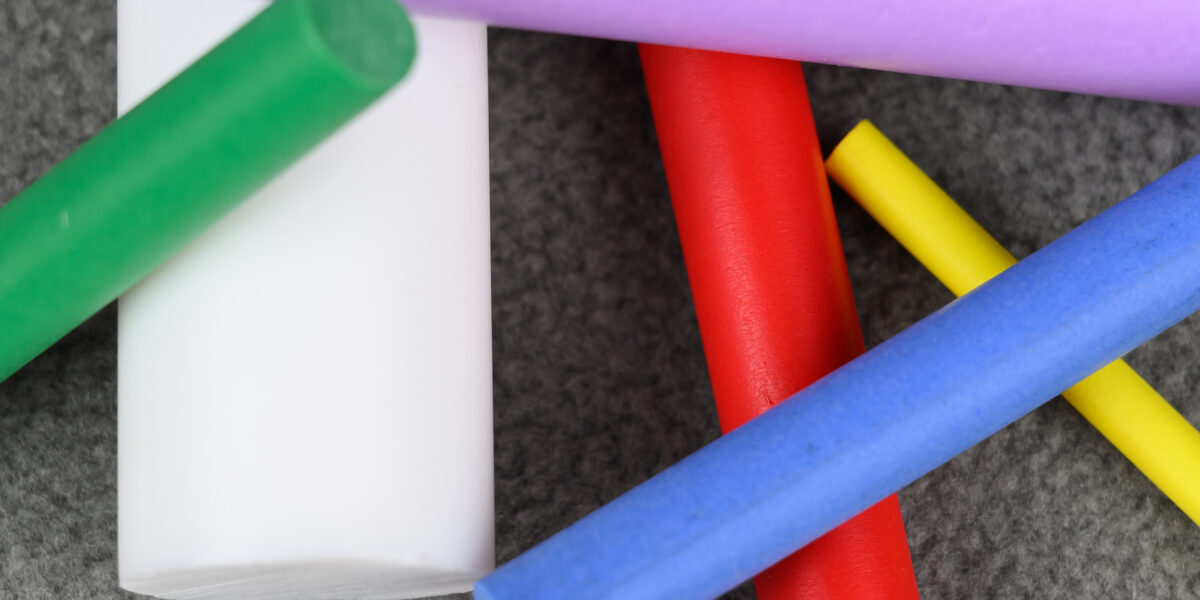
Custom plastic extrusion is a continuous manufacturing process used to produce plastic profiles with consistent cross-sectional geometry. The process involves melting a thermoplastic material and forcing it through a precision-machined die to achieve a defined shape. Extrusion is widely used across industries including data center, medical devices, industrial equipment, and aerospace, where dimensional consistency, material performance, and repeatability are critical.
For organizations focused on optimizing production efficiency, controlling unit cost, and maintaining design flexibility, custom plastic extrusion provides a scalable and reliable manufacturing solution. When paired with domestic manufacturing, it can also reduce supply chain risk and regulatory complexity.
The Extrusion Process and Materials
Plastic extrusion begins with the selection of a resin based on the mechanical, thermal, chemical, and environmental requirements of the application. Common materials include:
- Ultra-High Performance Thermoplastics like PAI (Torlon) and TPI (EXTEM™) – for mechanical strength, dimensional stability, and electrical performance at very high temperatures
- High-Performance Fluoropolymers like PFA, UHP PFA, FEP, PTFE, and PVDF – for chemically aggressive, high-purity, and electrically sensitive environments
- High-Performance Thermoplastics like PEEK, PEI, PSU, and PPSU – for regulated, high-temperature, or chemically demanding environments
- Engineering Thermoplastics like PC/ABS, Nylon, Acetal, and Polycarbonate – for structural and functional components that offer impact resistance, stiffness, and toughness
- Commodity Thermoplastics including PVC, HDPE, LDPE, LLDPE, and Polypropylene – for high-volume applications at a lower material cost
- Elastomers like EPDM, Silicone, Neoprene, SBR, and TPE – in either sponge or dense formats for flexibility, sealing, and energy absorption
The selected material is fed into an extruder, where it is conveyed by a rotating screw through a heated barrel. As the resin advances, it is gradually melted and homogenized under controlled temperature and pressure conditions. The molten polymer is then forced through a custom-designed die that defines the final cross-sectional profile.
Once the material exits the die, it is cooled—typically using air or water-based calibration systems—to stabilize dimensions and material properties. The extruded profile is then pulled downstream, cut to length, coiled, or further processed depending on the application.
The defining characteristic of custom extrusion is process tailoring. Die geometry, material formulation, line speed, cooling methods, and downstream operations are all engineered to meet specific performance, tolerance, and aesthetic requirements.
Custom extrusion can also support complex and multi-material designs, including co-extruded profiles that combine dissimilar materials within a single cross section. These configurations may integrate rigid and flexible plastics to create functional features such as living hinges, or combine plastic with metal substrates through processes like Meta-Plast® co-extrusion to deliver added structural support, stiffness, or conductivity. By engineering material interfaces within one continuous profile, manufacturers can reduce assembly complexity while enabling multiple performance requirements to be met simultaneously.
Key Benefits of Custom Plastic Extrusion
Engineered Performance for Application-Critical Environments
Custom plastic extrusion enables precise control over material behavior, geometry, and processing conditions, making it well suited for application-critical environments where performance consistency matters as much as part shape. By engineering the extrusion process around specific thermal, mechanical, chemical, and electrical requirements, manufacturers can deliver profiles that perform reliably over long service lifecycles.
This level of control is particularly important in regulated, infrastructure, and high-duty applications where material degradation, dimensional drift, or variability can lead to system-level failures.
Dimensional Precision and Process Repeatability
Extrusion supports tight dimensional tolerances and repeatable cross-sectional geometry across extended production runs. Die design, calibration methods, and in-line process controls are engineered to maintain consistency from the first part to the last, reducing downstream variability and rework.
For complex profiles, extrusion allows multiple functional features such as channels, ribs, or wall thickness transitions to be integrated into a single continuous process, minimizing secondary operations and assembly risk.
Material Engineering and Formulation Control
One of the most significant advantages of custom extrusion is the ability to engineer material performance, not just select a resin. Material formulations can be tailored with additives, reinforcements, or compound modifications to meet demanding functional and regulatory requirements.
These adjustments may include enhanced chemical resistance, elevated temperature performance, flame retardancy, electrical insulation, wear resistance, or controlled flexibility—allowing engineers to align material behavior precisely with real-world operating conditions.
Risk Reduction Through Manufacturing Alignment
Custom extrusion reduces risk by aligning design intent, material selection, and process execution within a single, controlled manufacturing workflow. Early collaboration on die design, tolerancing strategy, and material selection helps identify potential performance or manufacturability issues before production begins.
This integrated approach supports smoother qualification, faster design iteration, and more predictable scale-up for applications with long product lifecycles or strict validation requirements.
Lifecycle Consistency and Supply Chain Stability
For engineered products, long-term consistency is often more valuable than lowest initial cost. Custom extrusion supports material traceability, process consistency, and repeatable output over the life of a program, reducing the risk of variation due to material substitutions or uncontrolled process changes.
When paired with domestic manufacturing, extrusion further strengthens supply chain resilience by shortening lead times, simplifying logistics, and improving responsiveness to design or demand changes.
Better Manufacturing Decisions
Custom plastic extrusion is a highly adaptable manufacturing process that enables the production of engineered plastic profiles with precise geometry, consistent quality, and optimized material performance. When paired with domestic manufacturing, it offers additional advantages including regulatory compliance, reduced lead times, and supply chain stability.
For organizations evaluating extrusion for new designs or reassessing international sourcing strategies, understanding these technical and operational benefits can support better long-term manufacturing decisions.
Contact us to talk to our plastics experts about your engineering project today.