Altaflo 500 PVDF Pipe for Industrial Chemical and High-Purity Applications
When your process depends on chemical compatibility, purity, and long-term reliability, the piping material you choose matters. Whether you’re designing a semiconductor wet bench, a pharmaceutical water system, a chemical processing line, or an industrial fluid handling network, the right thermoplastic pipe can improve system performance, reduce maintenance, and extend service life.
Among today’s advanced plastic piping materials, PVDF (Polyvinylidene Fluoride) has become one of the industry’s go-to solutions for applications that demand exceptional chemical resistance, high purity, and elevated temperature performance. Pexco stocks Altaflo 500 PVDF Schedule 80 pipe and Altaflo 480 UHP PFA Schedule 40 pipe, and carries a broad range of additional thermoplastic pipe materials and sizes to meet more specialized requirements.
Why Plastic Pipe Continues to Replace Traditional Materials
Many industrial systems have historically relied on stainless steel, carbon steel, or glass-lined piping. These materials remain the right choice for certain applications, but engineered thermoplastics offer real advantages in a lot of fluid handling environments: better corrosion resistance, broader chemical compatibility, less weight to install and support, simpler installation, lower maintenance, longer service life, and smooth internal surfaces that resist buildup and keep flow efficient.
None of that makes thermoplastic the automatic answer, though — the key is matching the material to the actual process conditions.
Altaflo® 500 PVDF Pipe: Engineered for Aggressive Chemical Environments
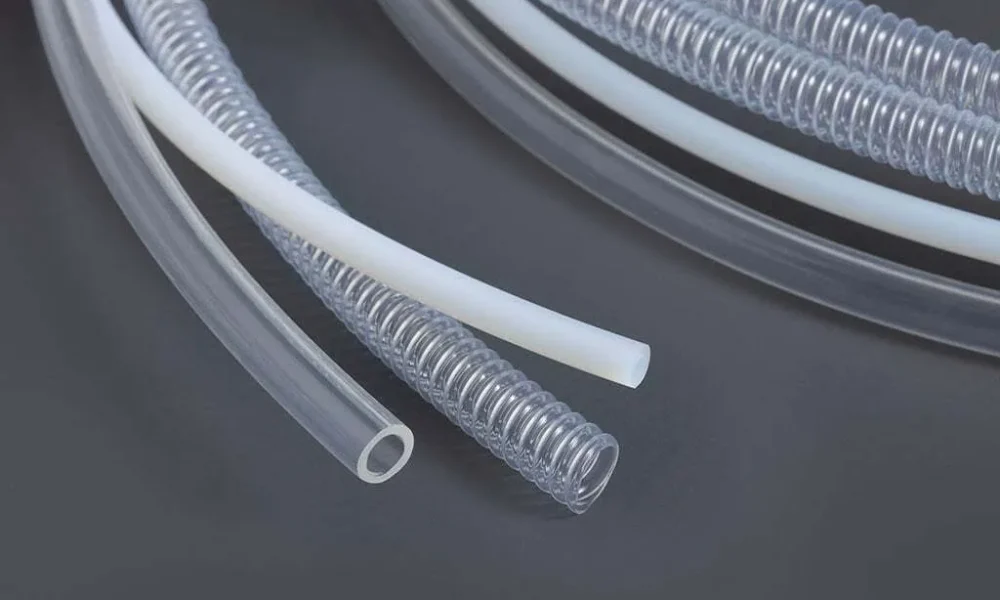
PVDF is one of the most versatile high-performance fluoropolymers, Altaflo 500 PVDF Tubing | Abrasion & Chemical Resistant, available for industrial piping. It combines mechanical strength, chemical resistance, and purity in a way that lets it handle process conditions where standard thermoplastics fall short.
Chemical resistance. PVDF resists a wide range of strong acids, bases, halogens, solvents, oxidizing chemicals, and other corrosive process fluids — the kind of chemistries that can degrade metal piping over time.
Temperature performance. PVDF homopolymer conforming to ASTM D3222 (Type I, Grade 2) is rated for continuous service up to about 250°F (121°C). As with any thermoplastic, allowable pressure decreases as temperature rises.
Purity. PVDF has low extractables and strong cleanliness characteristics, which is why it shows up so often in contamination-sensitive industries — semiconductor manufacturing, electronics, pharmaceutical processing, biotech, and lab systems.
Mechanical strength. Relative to many other fluoropolymers, PVDF offers high tensile strength, good abrasion and creep resistance, and strong dimensional stability — properties that matter in pressure piping systems under real operating stress.
Why Schedule 80?
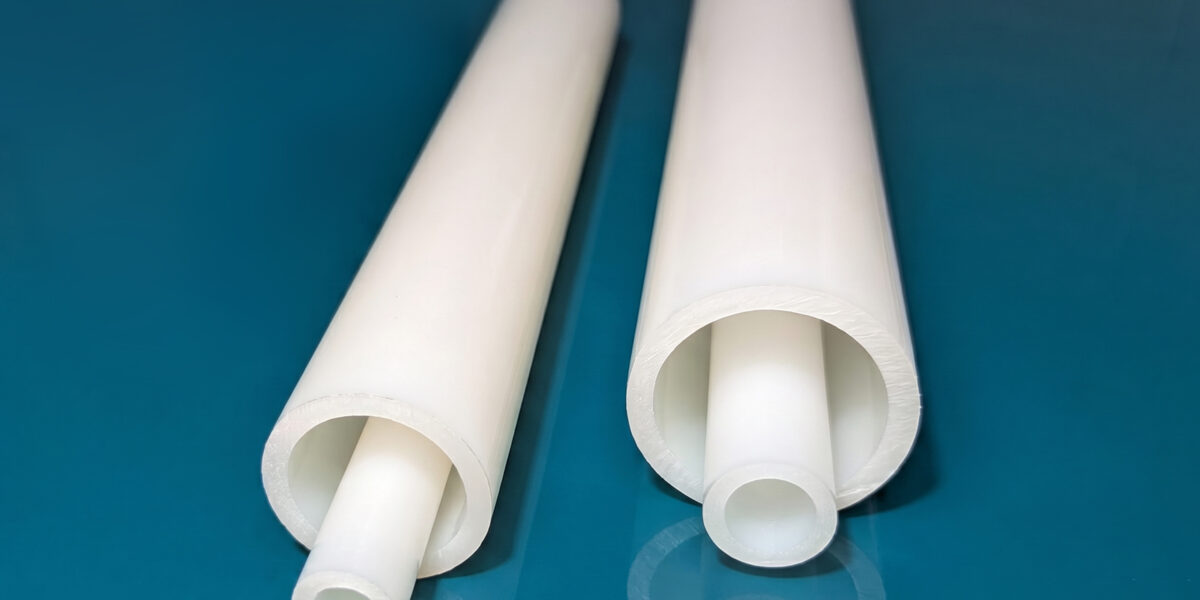
Altaflo 500 PVDF Schedule 80 pipe has thicker walls than Schedule 40, which translates directly into higher pressure ratings, greater safety margin, and better resistance to mechanical damage. As a general industry benchmark, PVDF Schedule 80 pipe carries a design stress rating around 1,360 psi at 73°F under ASTM D3222, though actual working pressure varies by diameter and drops as temperature rises — refer to Pexco’s derating tables for size-specific figures. For a lot of chemical processing and manufacturing environments, Schedule 80 is the sweet spot between chemical performance and structural durability — which is why it’s what we keep in stock in sizes from ¼” up to 6″.
UHP PFA Schedule 40 Pipe
For applications that need the highest levels of purity, Altaflo® 480 UHP PA Schedule 40 pipe is the step up from PVDF. PFA combines extremely low extractables, superior chemical resistance, outstanding thermal stability, smooth internal surfaces, and excellent purity characteristics — which is why it’s a preferred material for semiconductor manufacturing and other contamination-sensitive processes.
Why Schedule 40?
Unlike PVDF, where Schedule 80 is the workhorse, UHP PFA is typically specified in Schedule 40. PFA’s chemical inertness and purity are the reason it’s selected in the first place, not its wall thickness, so the thinner Schedule 40 wall is sufficient for the pressures typical of semiconductor and ultra-pure fluid delivery systems while keeping smoother internal geometry and lower material cost per foot than Schedule 80. Altaflo 480 UHP PFA Schedule 40 pipe is available from ¼” up to 2″, with Schedule 80 available on request for applications needing added structural margin. Pexco keeps UHP PFA Schedule 40 pipe in stock to support demanding production schedules and minimize lead times.
Where Altaflo 500 PVDF and UHP PFA Pipe Gets Used
Semiconductor manufacturing. Ultra-clean chemical delivery systems need materials that limit contamination while standing up to aggressive chemistries — chemical distribution, wet benches, process equipment, acid delivery, and water purification systems all rely on it.
Chemical processing. PVDF holds up against the aggressive chemicals common across industrial processing — chemical transfer lines, acid and caustic distribution, waste treatment, and chemical storage connections.
Pharmaceutical manufacturing. High-purity environments need materials that support contamination control while tolerating cleaning chemicals — purified water systems, process fluid distribution, chemical feed systems, and clean manufacturing environments.
Industrial water treatment. PVDF performs well against corrosive chemicals, high-purity water requirements, disinfection systems, and process filtration.
Beyond PVDF and UHP PFA
Pexco also supplies PVC, CPVC, polypropylene (PP), polyethylene (PE), PTFE, FEP, and other engineered fluoropolymers. Available sizes vary by material and application. If your project needs a specific diameter, pressure rating, or specialty material, our engineering and sales teams can help identify the right solution.
PVDF vs. Other Industrial Pipe Materials
| Material | Primary Advantages | Typical Applications |
| PVDF | High purity, chemical resistance, elevated temperature capability | Semiconductor, pharmaceutical, chemical processing |
| PFA | Ultra-high purity, exceptional chemical resistance | Semiconductor chemical delivery, ultrapure water |
| PTFE | Broad chemical compatibility and high temperature performance | Specialized chemical processing |
| Polypropylene (PP) | Cost-effective chemical resistance | General industrial processing |
| PVC | Strong value and corrosion resistance | Water treatment, industrial plumbing |
| CPVC | Higher temperature capability than PVC | Hot chemical systems |
Choosing between them comes down to chemical compatibility, operating temperature, pressure requirements, purity needs, mechanical demands, and any applicable regulatory considerations.
Why Engineers Specify Pexco
Industrial piping is critical infrastructure — material selection affects safety, uptime, maintenance costs, and overall system performance. Customers work with Pexco for in-stock PVDF Schedule 80 and UHP PFA Schedule 40 pipe, deep fluoropolymer expertise, application-focused engineering support, and reliable supply for demanding industrial markets.
Frequently Asked Questions
Is Altaflo 500 PVDF manufactured using Kynar 740 resin?
Yes, Altaflo® 500 Series PVDF pipe is manufactured using Kynar® 740 resin, a homopolymer PVDF grade known for its chemical resistance, mechanical strength, and purity.
What is the pressure rating of PVDF Schedule 80 pipe?
A common industry design stress benchmark for PVDF Schedule 80 pipe is around 1,360 psi at 73°F under ASTM D3222, though actual working pressure depends on pipe diameter, wall thickness, and operating temperature.
Is PVDF more chemically resistant than PVC?
PVDF resists a broader range of aggressive chemicals than PVC, including strong acids, halogens, and many solvents, and it holds up at higher temperatures. PVC is generally more cost-effective and performs well for water and moderate chemical service where extreme purity or elevated temperature isn’t required.
What’s the difference between PVDF and UHP PFA pipe?
Both are high-purity fluoropolymers, but PFA has a wider service temperature range — commonly cited from cryogenic conditions up to around 500°F (260°C), versus PVDF’s roughly 280°F ceiling — and UHP PFA grades are typically qualified against SEMI F57 for the lowest levels of trace metal and ionic extractables. PVDF costs less and is often sufficient for applications that don’t require semiconductor-grade purity.
What sizes does PVDF Schedule 80 pipe come in?
PVDF Schedule 80 pipe is commonly available from ¼” up to 6” nominal pipe size, typically in 20-foot lengths, with non-standard dimensions available on request.
How is PVDF pipe joined?
PVDF pipe is joined by thermo-fusion (butt fusion, socket fusion, or hot gas welding), threading, or flanging — fusion welding is the most common method for creating leak-tight, fully sealed joints in chemical service.
Need a Different Material or Size?
Not every application fits a standard specification. If you need a material, size, wall thickness, or configuration beyond our stocked inventory, contact Pexco with your requirements — our team can help identify the most appropriate thermoplastic piping solution for your operating conditions.
From PVDF Schedule 80 pipe for aggressive chemical environments to UHP PFA Schedule 40 pipe for ultra-high-purity processes, Pexco delivers engineered piping solutions built to perform in the world’s most demanding industrial applications. If you don’t see the material or size you need, call us with your requirements — our experts will help you find the right solution.
About the Authors
Kim Imes is the Senior Content Development at Pexco, where she creates customer-centric content that clearly communicates technical value and helps customers make informed decisions with confidence.
This article was reviewed for technical accuracy by Mary Hyde, the Vice President of Sales and Product at Pexco, and Dana Scott, the Director of Sales and Market Development. Hyde brings deep customer and product expertise, ensuring solutions align with real-world applications and deliver measurable value. Scott provides extensive sales leadership and customer insight, ensuring solutions meet real-world business needs and deliver measurable results.