
A Star on the Shoulder: Winter Applications with Pexco’s FTSTR Delineator
Winter can change what drivers see in seconds. Snow and slush can cover the pavement, while early darkness, rain, and glare make curves and shoulders harder to distinguish. Roadside delineation is able to add a layer of guidance.
Pexco’s Flat Top Star Ground Mount (FTSTR) Delineator gives drivers a reflective roadside reference on highways, rural routes, and other corridors where recognizing roadway alignment matters.
What Makes the FTSTR Unique?
The FTSTR combines a weather-resistant polypropylene post with Pexco’s original Star Hinge design. Its flat reflective face delivers 180-degree directional visibility, helping approaching drivers identify the road’s path.
Designed to meet MUTCD standards and tested to NTPEP protocols, the FTSTR is also MASH-16 compliant. The post comes in standard white, yellow, and orange body colors. It has a standard 48-inch height and a 54-inch option for West Virginia and Maine.
Unlike a single-use installation, the FTSTR uses a reusable, perforated square-steel anchor. The Star Hinge fits into the anchored tubing and locks in place with a pin. This design supports simplified post replacement.
Applications Where the FTSTR Makes the Biggest Difference
Roadway Shoulders and Rural Highways: FTSTR posts give motorists recurring visual cues along road edges, particularly where shoulders blend into surrounding terrain or where lighting is limited. They are especially useful on roads with long, unlit stretches.
Curves and Changing Alignments: A series of properly placed reflective posts can outline a bend before drivers reach it. The Federal Highway Administration (FHWA) identifies delineators as useful along horizontal curves, where roadside visual references help drivers understand the route ahead.
Interchange Ramps and Transitions: Entrance and exit ramps, lane-reduction transitions, and other changes in roadway alignment benefit from clear directional cues. Where specified by state DOTs, the FTSTR can supplement pavement markings and other traffic control devices.
Paved and Unpaved Routes: Because these posts stand outside the traveled way, they provide a useful guidance option where alternative pavement markings are limited or unavailable. Engineers should determine spacing, color, and placement based on the roadway and DOT requirements.
Why Is Roadside Delineation So Important in Winter?
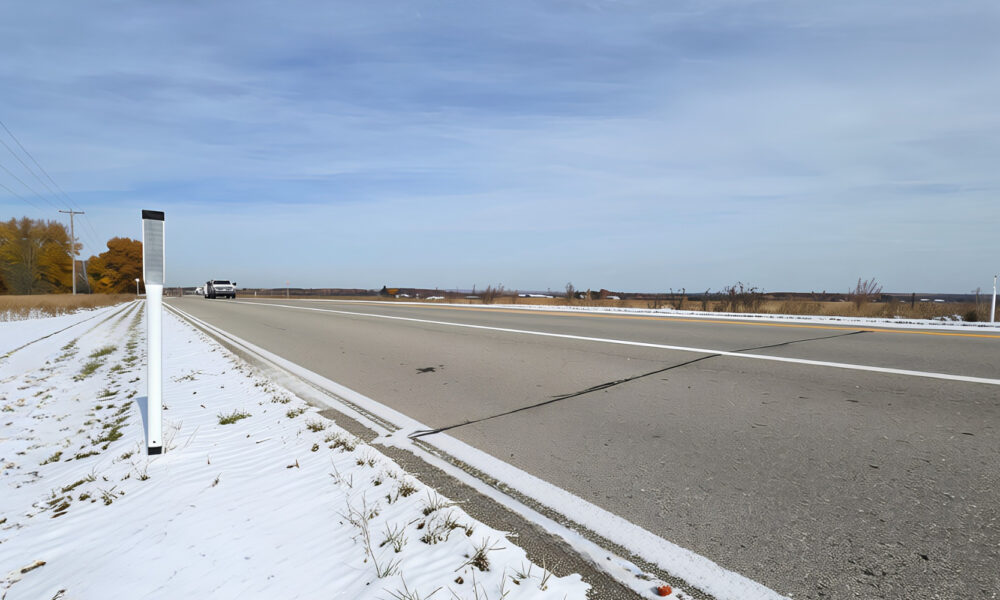
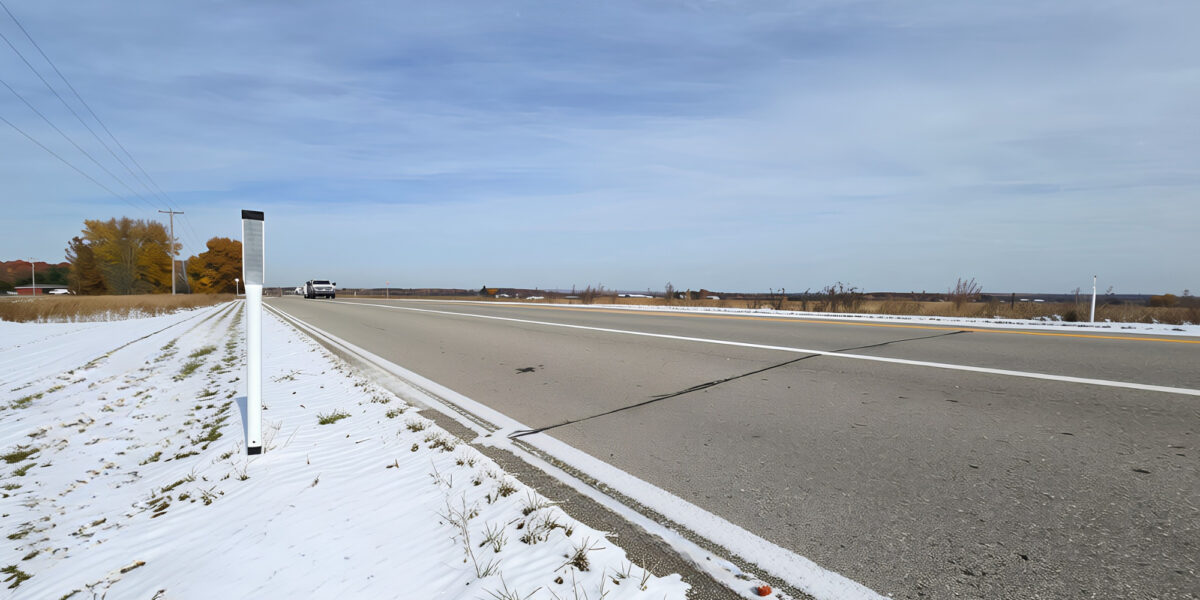
Ground-mounted delineators provide elevated visual guidance when snow, slush, or other winter conditions obscure other roadway markings.
According to the FHWA, more than 70% of U.S. roads are in regions that receive significant annual snowfall.
The FHWA also explains that delineators can be especially effective at night and in adverse weather, including when roads are wet or snow-covered.
When edge lines disappear under snow or slush, elevated reflective posts can continue to show the roadway’s general alignment, provided their reflective surfaces remain visible.
This matters on rural roads, curves, and ramps, where snowbanks and reduced daylight can make it difficult to distinguish pavement edges. FTSTR posts can also give maintenance crews a visual reference while checking winter roadway conditions.
They complement, rather than replace, pavement markings, warning signs, or purpose-built snow markers.
The Star of Winter Maintenance
The FTSTR’s Star Hinge and reusable steel anchor simplify post replacement and help streamline roadside maintenance.
Winter maintenance puts roadside devices near plows, drifting snow, and occasional vehicle contact. The FTSTR’s internal Star Hinge is designed to flex and rebound after impacts, while its steel anchor supplies a reusable mounting point if the post needs replacement.
Installation uses a standard post driver to set the square anchor, followed by seating and pinning the hinge. If a post becomes damaged, maintenance personnel can release the pin and replace the post while retaining an undamaged anchor.
This serviceable design can simplify repairs and reduce the need for recurring work crew intervention. However, the delineator is not specifically rated as snowplow-proof. Regular inspection and replacement as needed remain essential.
How Can Agencies Plan for Consistent Year-Round Visibility?
The American Traffic Safety Services Association (ATSSA) advocates for markings that perform in all weather conditions and encourage agencies to consider local climate in their maintenance programs.
FTSTR delineators offer complementary above-pavement guidance as part of a broader year-round visibility strategy.
Before installation, agencies should select compliant reflective sheeting, confirm post height and anchor length for local conditions, and follow applicable MUTCD and agency placement requirements.
Periodic inspections should confirm that posts remain upright, reflective sheeting faces approaching traffic, and anchors remain secure.
Ready to Make Roadside Guidance More Dependable?
Visit us at www.pexco.com/traffic to explore our Roadside Delineation options or contact our team to discuss your winter maintenance needs at www.pexco/contact-us/.
Frequently Asked Questions
What is an FTSTR delineator, and what is its primary purpose?
The Pexco Flat Top Star Ground Mount (FTSTR) Delineator is a reflective roadside marker designed to improve roadway visibility and help drivers recognize road alignment. Its weather-resistant polypropylene construction and 180-degree directional reflective visibility make it suitable for highways, rural roads, shoulders, and other locations where additional visual guidance is beneficial.
How do FTSTR delineators improve roadway visibility during winter?
FTSTR delineators improve roadway visibility during winter by providing elevated reflective guidance when snow, slush, or ice obscures pavement markings. Their above-ground placement helps drivers identify roadway boundaries and changing alignments, particularly on curves and rural highways. They complement traditional pavement markings and other traffic control devices during challenging winter conditions.
Where are FTSTR delineators commonly installed?
FTSTR delineators are commonly installed along roadway shoulders, rural highways, curves, interchange ramps, and roadway transitions. Their reflective surfaces help motorists identify road alignment in areas with limited lighting, reduced visibility, or changing roadway geometry. Transportation agencies can incorporate them into year-round roadway delineation programs.
How does the FTSTR Star Hinge design simplify maintenance?
Pexco’s proprietary Star Hinge simplifies maintenance by allowing the FTSTR posts to flex and rebound after impacts while supporting straightforward replacement when necessary. The design connects to a reusable perforated steel anchor, allowing maintenance crews to replace a damaged post without removing an undamaged anchor. This can reduce maintenance time and simplify roadside repairs.
Are FTSTR delineators suitable for areas with frequent snowfall and snowplowing?
FTSTR delineators are suitable for areas with frequent snowfall and snowplowing. They can provide supplemental roadway guidance in regions that experience frequent snowfall and winter maintenance operations. Their flexible hinge and replaceable post design offer maintenance advantages where roadside devices may experience impacts. However, FTSTR posts are not specifically rated as snowplow-proof, and agencies should evaluate local snow removal practices and installation requirements.
What sizes, colors, and reflective options are available for FTSTR delineators?
Pexco FTSTR delineators are available in standard 48-inch heights, with 54-inch options for West Virginia and Maine, and standard white, yellow, and orange colors. The posts accommodate flexible retroreflective sheeting from major manufacturers, allowing agencies to select configurations appropriate for their roadway applications and visibility requirements.
Do Pexco FTSTR delineators meet roadway safety standards?
Pexco’s FTSTR delineators are designed to meet applicable roadway safety standards, including the Manual on Uniform Traffic Control Devices (MUTCD) standards, are tested to National Transportation Product Evaluation Program (NTPEP) protocols, and are identified as MASH-16 compliant in Pexco’s product specifications. Transportation agencies should verify applicable state DOT requirements, installation specifications, and approved product listings before selecting delineators for a project.