Manufacturing Tolerances in Polymer Components
Manufacturing tolerances define the allowable variation from a specified dimension. In polymer components, they establish measurable requirements for fit and function. Tighter tolerances support greater dimensional precision; achieving that precision consistently requires attention to material behavior, process capability, and inspection.
What Is a Manufacturing Tolerance?
A tolerance sets the dimensional limits a component must meet to be accepted. For example, narrowing the tolerance on a tube’s outer diameter reduces its permitted departure from the nominal dimension:
| Nominal Outer Diameter | Specified Tolerance | Acceptable Range |
| 0.500 in. | ±0.005 in. | 0.495–0.505 in. |
| 0.500 in. | ±0.002 in. | 0.498–0.502 in. |
These values illustrate tolerance ranges and are not Pexco product specifications or capability claims.
Why Do Manufacturing Tolerances Matter?
Dimensional variation can affect connector engagement, component alignment, sealing, and installation. Engineers also evaluate tolerance stack-up—the combined effect of variation across mating components—to determine how an assembly will fit and operate.
Depending on the application, dimensions influence fluid flow, insulation coverage, and mechanical strength. Pressure performance also depends on material properties and operating conditions. Meeting dimensional requirements supports predictable assembly and service performance, alongside appropriate material selection and installation.
How Do Tighter Tolerances Affect Manufacturing Cost?
Tighter tolerances limit dimensional variation and can improve fit and performance in dimension-sensitive applications. Producing parts within narrower limits may require more precise tooling, additional process monitoring, more detailed inspection, or slower production. If process variation exceeds those limits, rejection rates may increase.
The cost depends on the material, geometry, process, and production volume. The manufacturing objective is to achieve the engineer’s specified dimensions and tolerances through the most cost-effective production approach that meets the requirements.
Why Is Dimensional Control Challenging in Plastics?
Polymers can change dimension during processing, cooling, and use. Several factors affect the finished component:
Shrinkage and cooling: Cooling changes dimensions; uneven cooling can contribute to distortion.
Temperature and conditioning: Thermal expansion affects dimensions, and moisture conditioning matters for some polymers.
Resin characteristics: Material grade and formulation influence flow and dimensional stability.
Tooling and process settings: Tool geometry, wall thickness, temperature, pressure, and production speed affect repeatability.
Inspection methods and measurement conditions should be defined with these behaviors in mind.
Which Dimensions Matter for Polymer Components?
The application determines which features require control. The following table connects common polymer solutions with their dimensional considerations.
| Polymer Solution | Dimensions to Evaluate | Application Considerations |
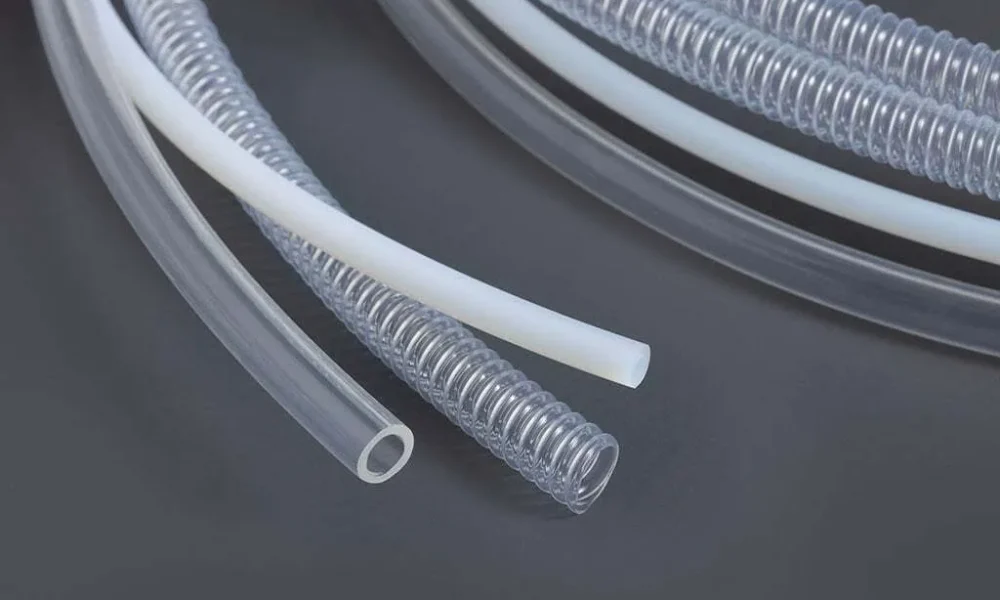
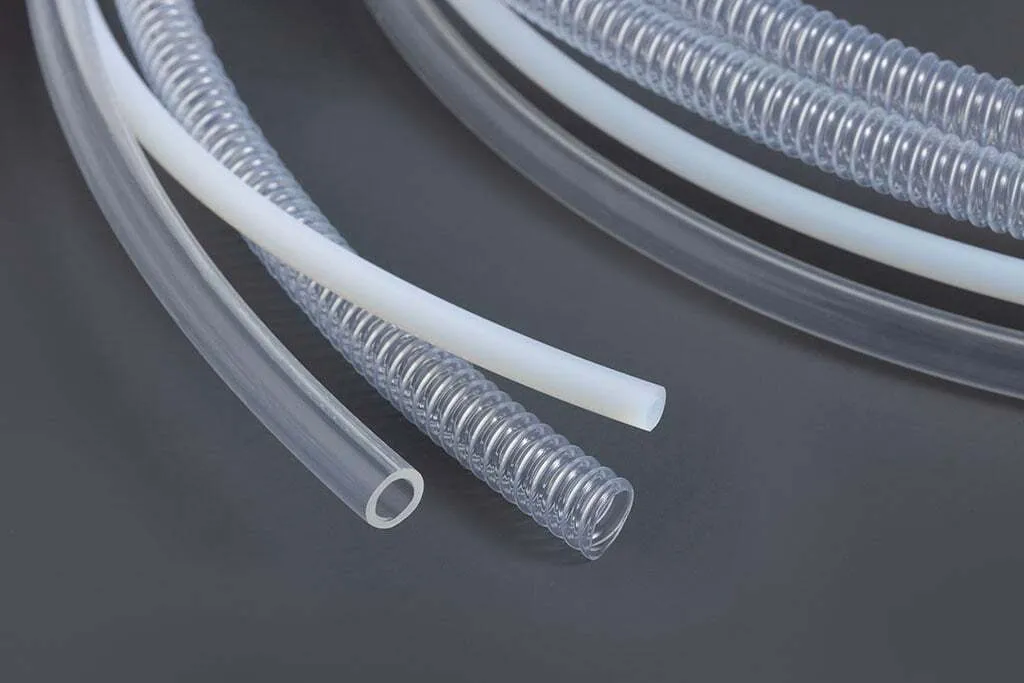
| Fluoropolymer tubing | Inner and outer diameter; wall thickness; roundness | Flow geometry, fitting engagement, and pressure performance in semiconductor, chemical processing, and life sciences systems |
| Custom extruded profiles | Mating features; wall thickness; overall geometry | Installation, alignment, and fit within industrial and other assemblies |
| Heat shrink tubing | Expanded and recovered inner diameter; recovered wall thickness; longitudinal change | Installation clearance, final fit, insulation coverage, and coverage after heating |
| Molded medical components | Mating features; assembly interfaces; critical part dimensions | Repeatable assembly and device function within the validated design |
For fluid handling, chemical compatibility and purity require separate material evaluation. For heat shrink, environmental sealing also depends on construction, such as an appropriate adhesive-lined option, and correct installation.
Pexco’s Altaflo® fluoropolymer tubing includes UHP PFA, PFA, PTFE, FEP, and PVDF options. Pexco’s Insultab® heat shrink portfolio includes PVC, polyolefin, specialty materials, and multi-wall constructions. Use the selected product’s specifications to guide dimensional and material selection.
How Can Engineering and Manufacturing Teams Plan for Success?
An early tolerance review translates the drawing into a production and inspection plan. Engineering, quality, and manufacturing teams should review:
- Critical dimensions and mating-component details, including tolerance stack-up.
- Material requirements and operating conditions.
- Process capability, tooling needs, and anticipated production volume.
- Measurement methods, inspection requirements, and conditioning.
- Cost and lead-time implications of the proposed manufacturing approach.
Any proposed dimensional or tolerance change must be evaluated against the application’s requirements before implementation.
Frequently Asked Questions
What is a manufacturing tolerance?
A manufacturing tolerance is the allowable variation from a specified dimension. It defines the dimensional acceptance limits for a component.
Why are tolerances important in manufacturing?
Tolerances establish measurable requirements for fit and dimensional consistency. Meeting them supports assembly, intended component function, and repeatable production quality.
How do tighter tolerances improve dimensional precision?
Tighter tolerances narrow the acceptable dimensional range, limiting how far an accepted component can depart from the specified dimension. This can improve fit and consistency in dimension-sensitive applications.
Why can tighter tolerances cost more to manufacture?
A narrower dimensional range may require more precise tooling, additional process control, more detailed inspection, or slower production. The cost depends on the material, geometry, process, and production volume.
Can tolerance requirements be changed to reduce cost?
Potential changes can be evaluated collaboratively, but the engineer/purchaser must determine whether they meet the application’s requirements and approve any revision. Manufacturing cost alone does not justify departing from an approved specification.
Why are tolerances important in plastic extrusion?
Polymers can shrink during cooling and change dimension with temperature and other conditions. Controlling these effects helps extruded tubing and profiles meet specified dimensions consistently.
What information should engineers provide for a tolerance review?
Provide the drawing, nominal dimensions, tolerances, critical features, material requirements, mating-component details, operating conditions, anticipated volume, and inspection requirements.
Discuss Your Dimensional Requirements With Pexco
Share your drawings, material requirements, and operating conditions with Pexco to discuss a manufacturing approach for your polymer components.
Written by:
Kim Imes, Senior Demand Generation Manager, creates customer-focused content that simplifies complex technical topics and helps customers make confident, informed decisions.
This article was reviewed for technical accuracy by Mary Hyde, the Vice President of Sales and Product at Pexco. Hyde brings deep customer and product expertise, ensuring solutions align with real-world applications and deliver measurable value.