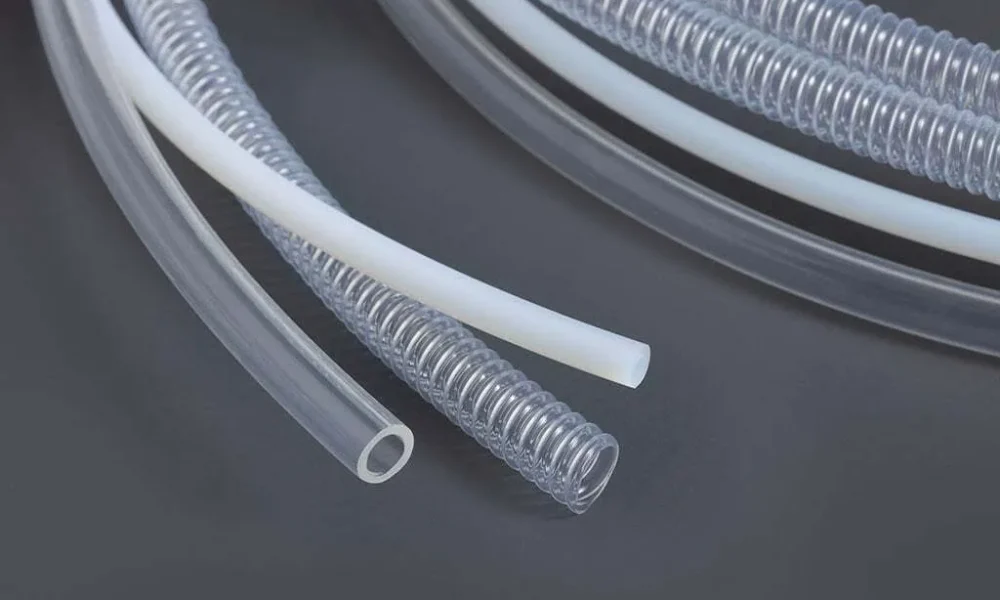

Why Engineers Choose PVDF Pipe for Water Treatment Systems
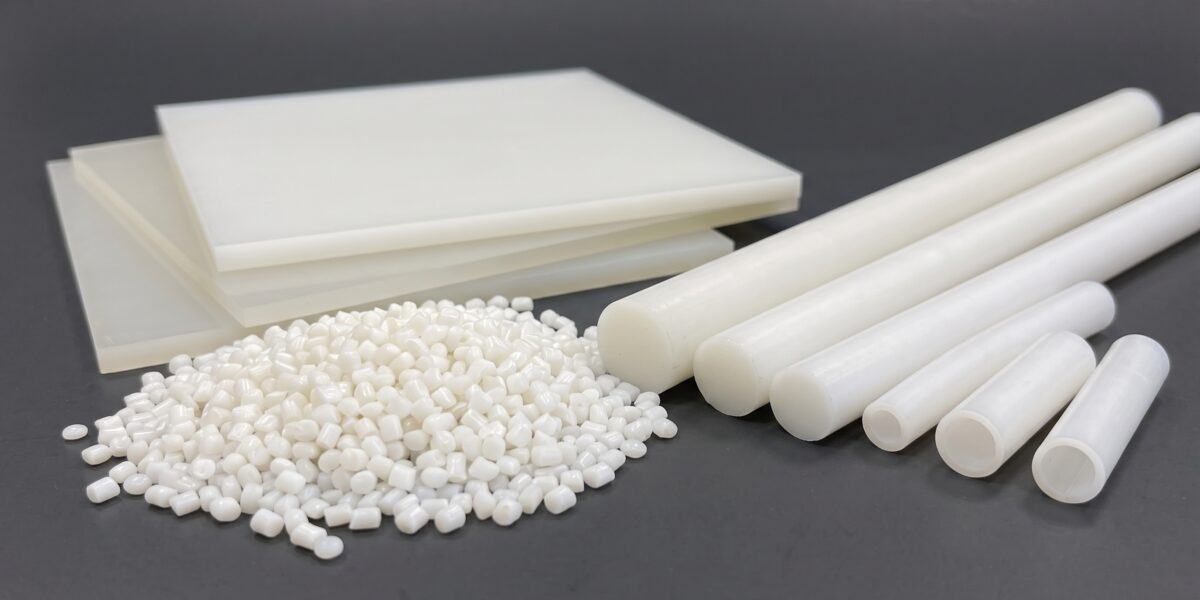
Corrosion Resistance, Compliance, and Long-Term Performance
Pexco Altaflo® 500 PVDF Schedule 80 pipe is a corrosion-resistant fluoropolymer piping solution extruded from 100% virgin-grade Kynar® 740 homopolymer PVDF, engineered for water-treatment systems that handle aggressive chemicals, high-purity fluids, and long-service-life demands. Engineers and OEMs specify Altaflo PVDF pipe for municipal water treatment, industrial process water, semiconductor water systems, reverse osmosis, deionized water, and wastewater applications where corrosion, contamination, and material failure carry real operational risk. Built on three fundamentals — corrosion resistance, verified compliance, and long-term performance — Altaflo 500 protects system uptime where conventional piping materials fall short.
Why Engineers Choose PVDF Pipe for Water Treatment Systems
Water treatment systems operate in demanding environments where chemical exposure, corrosion, contamination control, and long service life are critical design considerations. Selecting the right piping material can have a significant impact on system reliability, maintenance requirements, and overall lifecycle costs.
Polyvinylidene fluoride (PVDF) pipe is a high-performance fluoropolymer solution commonly used in water treatment, chemical feed, reverse osmosis (RO), deionized (DI) water, ultrapure water, wastewater, and semiconductor water systems. Engineers often specify PVDF when applications require a combination of chemical resistance, high-purity fluid handling, mechanical durability, and long-term corrosion protection. Pexco’s Altaflo 500 PVDF is extruded from 100% virgin-grade Kynar 740 homopolymer resin and conforms to ASTM D3222 (Type I, Grade 2), delivering 5,000–7,000 psi tensile strength — the highest in the Altaflo fluoropolymer line — with a continuous service temperature up to 250°F (121°C).
Unlike metal piping, PVDF will not rust, pit, or scale when exposed to many aggressive chemicals used in water treatment processes. It resists a broad range of strong acids, oxidizers, and halogens, and its extremely low extractables help reduce contamination risks in high-purity systems where maintaining fluid integrity is essential. These characteristics make PVDF a strong choice for applications involving oxidizers, acids, and other challenging treatment chemistries — while for strong-caustic or full-pH-range service, Pexco’s PTFE and UHP PFA grades extend the same fluoropolymer platform.
For pressurized service, Altaflo 500 Schedule 80 pipe carries a design-stress benchmark near 1,360 psi at 73°F under ASTM D3222 (*derating with temperature and diameter*). It is produced from 100% virgin-grade Kynar 740 PVDF resin which is approved for food-contact applications, complies with FDA Regulation 21 CFR 177.1500, is certified to NSF/ANSI 61 and NSF/ANSI 372 standards, and meets UL 94 V-0 flammability requirements. Available in ¼″–6″ Schedule 80 and joined by thermo-fusion (butt, socket, IR), threading, or flanging for leak-tight systems, it gives engineers a code-referenced, durable option for demanding water lines.
Pexco Altaflo® PVDF pipe combines the proven performance advantages of PVDF with Pexco’s technical expertise, custom extrusion capabilities, and application support to help engineers and OEMs design reliable piping systems for demanding water treatment environments.
Water Treatment Challenges That Drive PVDF Pipe Selection
Water treatment systems are exposed to aggressive chemicals and operating conditions that can accelerate corrosion, material degradation, contamination, and maintenance requirements. Selecting a piping material that can withstand these challenges is critical for maintaining system reliability and reducing lifecycle costs. Because Altaflo 500 PVDF resists most acids, oxidizers, and halogens while delivering the highest tensile strength in the Altaflo fluoropolymer line (5,000–7,000 psi), it is well matched to the specific chemistries below — with the practical note that strongly caustic (high-pH) service is better suited to PTFE or PFA.
Chlorine Dioxide and Oxidizing Chemicals
Chlorine dioxide is an effective treatment chemical but can contribute to material degradation in some piping systems. PVDF is frequently specified where exposure to oxidizers and halogens is a concern because, as a fluoropolymer, it offers excellent resistance to these aggressive chemistries while retaining the mechanical strength and abrasion resistance that oxidizer feed lines under pressure require.
Ferric Chloride Compatibility
Ferric chloride is commonly used in coagulation and wastewater treatment processes and is highly corrosive to metals. PVDF’s broad resistance to acidic and halogen-bearing chemistries makes it a strong candidate for ferric chloride service, where it withstands corrosive conditions while providing long-term mechanical durability and dimensional stability under flow and pressure.
Corrosion of Metal Piping Systems
Traditional metal piping can be susceptible to rust, scaling, pitting, and corrosion when exposed to treatment of chemicals and harsh operating conditions. Because PVDF does not rust, pit, or scale like metals, it can help reduce corrosion-related maintenance, leaks, and premature replacement.
Contamination Risks in High-Purity Water Systems
Deionized, reverse osmosis, ultrapure, and semiconductor water systems require materials that preserve fluid purity and minimize contamination risks. PVDF is often selected for these applications because of extremely low extractable levels and strong cleanliness characteristics. Altaflo 500 is produced from 100% virgin-grade Kynar 740 homopolymer PVDF resin which is certified to NSF/ANSI 61 and 372 for drinking-water component.
PVDF Pipe Applications in Water Treatment
Water treatment applications have unique performance requirements ranging from chemical resistance and corrosion protection to contamination control and purity. PVDF pipe is frequently specified where these requirements are critical to long-term system reliability.
| Water Treatment Application | Why PVDF Works |
| Chemical Feed Systems | Excellent resistance to many treatment chemicals and oxidizers |
| Reverse Osmosis (RO) Systems | Corrosion resistance and long-term durability |
| Deionized (DI) Water Systems | Supports high-purity fluid handling and low contamination risk |
| Ultrapure Water Systems | Excellent purity characteristics for sensitive processes |
| Industrial Wastewater Treatment | Withstands exposure to aggressive treatment chemistries |
| Municipal Water Treatment | Durable performance in demanding treatment environments |
| Semiconductor Water Systems | High-purity performance and contamination control capabilities |
By aligning material performance with application-specific requirements, engineers can help improve system reliability, reduce corrosion-related maintenance, and support long-term operational performance in water treatment facilities.
How does PVDF pipe resist corrosion?
PVDF pipe resists corrosion because it is inherently resistant to many acids, bases, oxidizers, halogens, water treatment chemicals, and appropriate outdoor exposures. Unlike metal piping, PVDF does not rust, pit, or scale, which helps maintain system reliability and reduce the risk of corrosion-related leaks or premature replacement.
This corrosion resistance is a key reason engineers evaluate PVDF for demanding chemical feed, high-purity, and process water environments.
By reducing degradation and corrosion risk, PVDF can contribute to lower maintenance demand and longer system life when properly specified.
PVDF Pipe Compliance and Certification Considerations
Engineers selecting PVDF pipe should evaluate applicable certifications, chemical compatibility, and ASTM dimensional standards such as ASTM D3222 for PVDF material. pressure ratings, temperature capabilities, traceability requirements, and local regulations. Project requirements should always be reviewed against the specific product, operating conditions, and fluid chemistry before final material selection.
Important considerations may include NSF/ANSI 61 (drinking water system components) and (food equipment materials) certification requirements where applicable, design pressure, installation environment, chemical concentration, temperature, and project-specific documentation needs.
Because requirements vary by application, engineers should confirm that the selected PVDF product matches the system design and compliance expectations.
Altaflo 500 PVDF Physical Properties
Altaflo 500 is produced from 100% virgin-grade Kynar® 740 homopolymer PVDF resin. The material is designed to provide abrasion resistance, mechanical strength, low permeability, and low extractable levels for demanding chemical-processing and ultrapure-water applications. Kynar 740 PVDF resin is approved for food-contact applications, complies with FDA Regulation 21 CFR 177.1500, is certified to NSF/ANSI 61 and NSF/ANSI 372 standards, and meets UL 94 V-0 flammability requirements.
| Physical Property | ASTM Test Method | Units | Typical Values |
| Upper service temperature | Not listed | °F | 250 |
| Specific gravity | ASTM D792 | Not listed | 1.77–1.79 |
| Tensile strength | ASTM D1708 | psi | 5,000–7,000 |
| Elongation | ASTM D638 | % | 50–200 |
| Flexural modulus | ASTM D790 | psi | 240,000–300,000 |
| Hardness | ASTM D2240 | Shore D | 76–80 |
The values above are based on testing performed at 73°F. Actual performance can vary depending on temperature, chemical concentration, pressure, and other application conditions. Pexco recommends consulting the factory for application-specific details and not exceeding the listed working pressure.
PVDF Piping System Components
A PVDF piping system may include pipe, elbows, tees, reducers, flanges, couplings, valves, adapters, and instrumentation connections. These components help engineers design complete fluid handling systems using compatible materials for applications that require corrosion resistance, purity, and long-term system performance.
Using compatible piping and fitting components helps reduce the risk of system weak points, material mismatch, and premature failures.
Pexco can support engineers, OEMs, and system designers with fluoropolymer solutions and technical application support.
When Should You Choose PVDF instead of FEP, PFA, PVC or CPVC
There is no single piping material that is best for every application. The optimal choice depends on factors such as chemical exposure, purity requirements, operating temperature, expected service life, and project budget. Understanding where each material performs best can help engineers make informed material selection decisions. Generally, moving from PVC through CPVC, PVDF, FEP, and PFA increases chemical resistance, temperature capability, and purity.
Choose PVDF When:
- Exposure to strong oxidizers or aggressive acids and halogens is expected
- High-purity water or contamination control is critical
- Long asset life and reduced maintenance are priorities
- Corrosion-related failures could create costly downtime
- Applications involve deionized (DI), ultrapure, semiconductor, or chemical-process water systems
- Mechanical strength and pressure capability matter — PVDF offers the highest tensile strength of the common fluoropolymers (5,000–7,000 psi) with continuous service to 250°F (121°C)
- Higher temperature performance and chemical compatibility are required
Choose FEP When:
- Broad chemical resistance is required across acids, bases, oxidizers, and solvents
- Full visual flow inspection or process monitoring is valuable — FEP is transparent
- Added flexibility is needed for tightly routed runs
- Higher temperature capability than PVDF is required — FEP is rated to ~400°F (204°C)
- Sodium Hypochlorite is combined with UV for water treatment plants
- The application needs near-PFA chemical inertness without the highest-purity semiconductor requirement
Choose PFA When:
- Maximum purity and the lowest extractables are required — PFA is the preferred grade for semiconductor and ultrapure fluid paths, with UHP grades qualified to SEMI F57
- The most aggressive chemistries across the full pH range must be handled, including strong caustics that exceed PVDF’s limits
- High-temperature service is required — PFA is rated to ~500°F (260°C)
- A smooth internal surface is needed to minimize particle generation in contamination-sensitive systems
- Applications include semiconductor wet-bench, ultrapure chemical delivery, or critical high-purity fluid handling
Choose PVC When:
- Budget is the primary consideration
- Chemical exposure is relatively mild
- Water treatment requirements are less demanding
- General-service fluid handling is sufficient
- Maximum corrosion resistance and purity are not critical concerns
Choose CPVC When:
- Moderate chemical resistance is needed
- Operating temperatures exceed the capabilities of standard PVC
- A balance between cost and performance is desired
- The application requires greater temperature capability but does not require the purity or chemical resistance of PVD
Material Selection at a Glance
| PVC | CPVC | PVDF | FEP | PFA | |
| Cost Efficiency | 🟩 Excellent | 🟨 Good | 🟧 Moderate | 🟥 Limited | 🟥 Limited |
| Flexibility | 🟨 Good | 🟧 Moderate | 🟧 Moderate | 🟩 Excellent | 🟩 Excellent |
| Transparency | 🟥 Opaque | 🟥 Opaque | 🟧 Translucent | 🟨 Translucent | 🟨 Translucent |
| Semiconductor / Ultra-Pure Fluids | 🟥 Limited | 🟥 Limited | 🟨 Very Good | 🟩 Excellent | 🟩 Best Available |
| Continuous Service Temperature | 🟥 ~140°F | 🟧 ~200°F | 🟨 ~300°F | 🟩 ~400°F | 🟩 ~500°F |
| Chemical Resistance | 🟨 Good | 🟨 Better | 🟩 Excellent | 🟩 Excellent | 🟩 Excellent |
| Temperature Capability | 🟨 Good | 🟨 Better | 🟩 Excellent | 🟩 Excellent | 🟩 Outstanding |
| Corrosion Resistance | 🟨 Good | 🟨 Better | 🟩 Excellent | 🟩 Excellent | 🟩 Excellent |
| High-Purity Applications | 🟥 Limited | 🟥 Limited | 🟨 Very Good | 🟩 Excellent | 🟩 Outstanding |
While PVC and CPVC are effective solutions for many water treatment applications, engineers often specify PVDF when system reliability, chemical resistance, contamination control, and long-term lifecycle performance are critical design requirements. Altaflo PVDF pipe is designed to meet these demanding conditions while providing the performance advantages associated with high-quality PVDF materials.
Why Engineers Specify Altaflo 500 PVDF Pipe
Altaflo 500 PVDF pipe combines the proven performance of PVDF with Pexco’s fluoropolymer extrusion expertise, custom manufacturing capabilities and technical support. Altaflo delivers excellent chemical resistance, abrasion resistance, low permeability, and high-purity fluid handling for demanding water treatment, chemical processing, and industrial applications.
Engineers and OEMs also benefit from custom extrusion options, application guidance and a range of available sizes and configurations to support unique system requirements.
For complete specifications, compliance information, sizes and performance data, view the Altaflo 500 PVDF product page or download the product datasheet.
A Trusted Partner for Water Treatment Projects
Whether designing chemical feed systems, reverse osmosis systems, deionized water systems, wastewater treatment infrastructure, or semiconductor water applications, engineers rely on materials that balance chemical resistance, purity, durability, and long-term reliability. Altaflo® PVDF pipe provides performance advantages while being backed by Pexco’s manufacturing expertise and application support.
Need help selecting the right piping material? Contact Pexco for application support or to discuss whether PVDF, PVC, CPVC, PFA, or another material is best suited for your water treatment system.
Frequently Asked Questions About PVDF Pipe for Water Treatment
Is PVDF pipe suitable for drinking water applications?
PVDF pipe may be suitable for drinking water applications when the specific product meets applicable potable water certifications, such as NSF/ANSI 61, and regulatory requirements. Engineers should confirm certification status, project specifications, and local requirements before selecting PVDF for drinking water or municipal water applications.
What chemicals can PVDF pipe handle?
PVDF pipe can handle a broad range of acids, bases, oxidizers, halogens, and common water treatment chemicals, including, sulfuric acid, and hydrogen peroxide. Chemical compatibility should always be verified based on the specific chemical, concentration, temperature, pressure, and exposure conditions of the application.
How long does PVDF pipe last?
Properly designed PVDF piping systems can provide decades of reliable service in demanding chemical and water treatment environments. Actual service life depends on chemical exposure, temperature, pressure, installation quality, maintenance practices, and whether the selected product is appropriate for the operating conditions.
What is the best pipe material for high-purity water systems?
PVDF pipe is commonly used in deionized water, reverse osmosis, and ultrapure water systems because it supports high-purity fluid handling and resists many chemicals used in treatment processes. It is often selected when contamination control and reliable long-term performance are priorities.
Can Altaflo® PVDF pipe be customized for OEM applications?
Pexco supports OEMs and engineers with custom extrusion capabilities for application-specific tubing and pipe solutions. Depending on project requirements, custom dimensions, lengths, configurations, and packaging options may be available. Contact Pexco to discuss specific application needs.
What is the difference between PVDF and CPVC pipe?
PVDF generally provides higher chemical resistance, higher purity, and broader suitability for aggressive chemical and high-purity applications, while CPVC is often selected for cost-effective elevated-temperature service. The best choice depends on the application, chemical exposure, pressure, temperature, and compliance requirements.
Does PVDF pipe require special joining methods?
PVDF piping systems may require joining methods that differ from those used with traditional metal or thermoplastic piping materials. The selection of the appropriate joining method depends on factors such as system design, operating conditions, and application requirements. Altaflo® 500 PVDF is suitable for use with conventional fittings; however, it is not recommended for use with flare fittings. Engineers should consult product specifications and installation requirements when selecting joining methods for PVDF piping systems.
What is the service life of PVDF pipe compared with CPVC?
PVDF is often selected for applications requiring superior chemical resistance, high-purity performance, and long-term durability in aggressive operating environments. While both PVDF and CPVC can provide years of reliable service when properly specified, PVDF is typically evaluated for applications involving strong oxidizers, corrosive chemicals, high-purity water, and demanding process conditions where material degradation can impact system performance. Actual service life depends on factors such as chemical exposure, temperature, pressure, installation quality, and operating conditions. Engineers should evaluate the specific application requirements when comparing PVDF and CPVC materials.
Conclusion: Specifying PVDF Pipe for Water Treatment Systems
Engineers should specify PVDF pipe when water treatment systems require corrosion resistance, chemical compatibility, high-purity performance, and long-term reliability beyond what conventional thermoplastics may provide. For demanding chemical feed, ultrapure water, reverse osmosis, deionized water, and wastewater applications, PVDF can reduce lifecycle risk and support more durable system design.
For water treatment systems where performance, reliability, and lifecycle cost are priorities, Pexco Altaflo PVDF pipe offers a product-focused solution backed by technical application support.
Written by:
Kim Imes, Senior Demand Generation Manager, creates customer-focused content that simplifies complex technical topics and helps customers make confident, informed decisions.
This article was reviewed for technical accuracy by Mary Hyde, the Vice President of Sales and Product at Pexco, and Dana Scott, the Director of Sales and Market Development. Hyde brings deep customer and product expertise, ensuring solutions align with real-world applications and deliver measurable value. Scott provides extensive sales leadership and customer insight, ensuring solutions meet real-world business needs and deliver measurable results.