Our Products
Our Brands
Markets
Capabilities
About Pexco
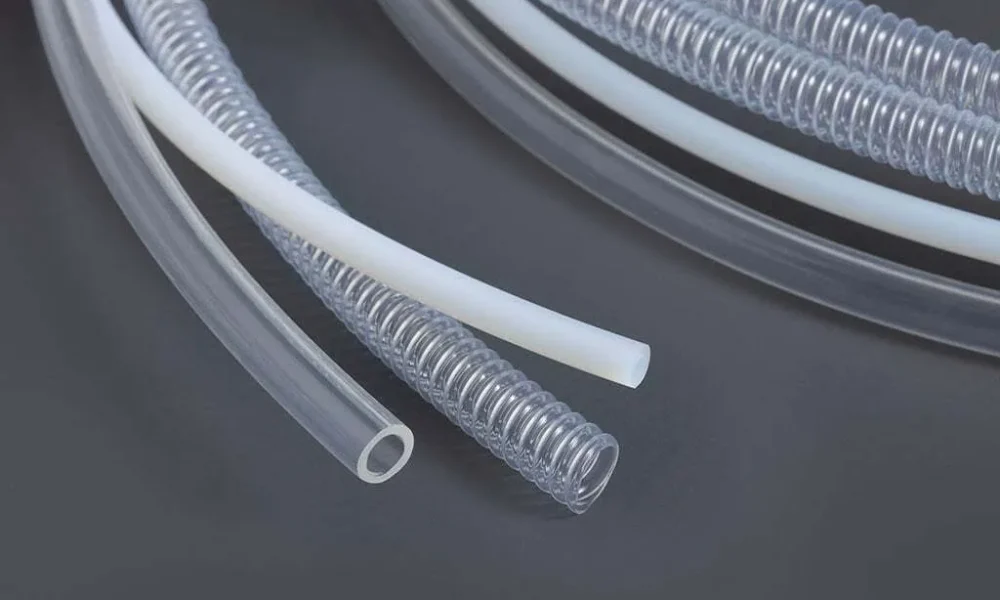

PVDF vs. PTFE: Key Differences & How to Choose
PVDF (polyvinylidene fluoride) and PTFE (polytetrafluoroethylene) are both fluoropolymers, but they are not interchangeable: PTFE is fully fluorinated, while PVDF is only partially fluorinated, and that difference sets the trade-off between them. PTFE resists nearly all industrial chemicals across the full pH range, runs from −410°F to 500°F, and has the lowest coefficient of friction of any fluoropolymer. PVDF gives up the top of that chemical and temperature range (it is limited above about 250°F and is attacked by strong bases and some polar solvents) in exchange for much higher mechanical strength, stiffness, and abrasion resistance, plus easier processing and a lower cost.
Choose PTFE when the priority is the broadest chemical resistance, the widest temperature range, or the lowest friction; choose PVDF when a line needs mechanical strength, abrasion resistance, or pressure handling at moderate temperature and lower cost.
Table of Contents
- PVDF vs. PTFE: The Key Differences
- PVDF vs. PTFE Temperature Limits
- PVDF vs. PTFE: Strength, Abrasion, and UV Resistance
- Which Industries Use PVDF vs. PTFE?
- PVDF vs. PTFE Cost: Which Is More Expensive?
- PVDF vs. PTFE: Which Should You Choose?
- Custom and Bulk PVDF and PTFE Tubing from a North American Manufacturer
- Frequently Asked Questions
Pexco is a North American manufacturer and supplier of both PVDF and PTFE tubing, extruding them under its Altaflo® brand. PVDF is offered as rigid Altaflo® 500 PVDF tubing and flexible Altaflo® 550 PVDF Flex tubing; PTFE as Altaflo® 100 PTFE tubing. This guide compares the two materials property by property and gives a decision rule; for the full profile of each, see Pexco’s PVDF properties and applications guide and PTFE properties, grades, and applications guide.
PVDF vs. PTFE: The Key Differences
The core difference is fluorination. PTFE is fully fluorinated, which gives it near-universal chemical resistance, a −410°F to 500°F service range, and the lowest friction of any fluoropolymer, but leaves it mechanically soft with the lowest tensile strength in the family. PVDF is partially fluorinated: it trades the top of that chemical and temperature range for much higher tensile strength, a far higher flexural modulus, better abrasion resistance, easier melt processing, and a lower cost. In short, PTFE is the chemical-and-temperature specialist and PVDF is the mechanical-and-value specialist.
| Property (ASTM test) | PTFE — Altaflo® 100 | PVDF — Altaflo® 500 (550 Flex) |
|---|---|---|
| Upper service temperature | 500°F (550°F short-term) | 250°F (212°F flex) |
| Temperature range | −410°F to 500°F (cryogenic capable) | −20°F to 250°F |
| Specific gravity (D792) | 2.15 | 1.77–1.79 (1.78 flex) |
| Tensile strength (D1708) | 2,500–3,000 psi | 5,000–7,000 psi (3,500 flex) |
| Elongation (D638) | 200–400% | 50–200% (200–500% flex) |
| Flexural modulus (D790) | 27,000 psi | 240,000–300,000 psi (40,000–60,000 flex) |
| Hardness (D2240) | 60 Shore D | 76–80 Shore D (57–62 flex) |
| Chemical resistance | Near-universal; resists nearly all chemicals | Strong vs. acids, oxidizers, halogens; limited with strong bases and some polar solvents |
| Coefficient of friction | Lowest of any fluoropolymer | Higher than PTFE |
| Melt-processable | No (paste-extruded, skived, machined) | Yes (conventional extrusion / molding) |
| Relative cost | Higher | Lower |
PVDF vs. PTFE Temperature Limits
PTFE handles far higher and far lower temperatures than PVDF. PTFE is rated for continuous service from −410°F to 500°F, covering cryogenic lines through high-temperature chemical service. Rigid PVDF (Altaflo 500) is rated to 250°F, and the flexible grade (Altaflo 550 PVDF Flex) to 212°F. For service above roughly 250°F (or for cryogenic temperatures), PTFE is the only choice of the two. Below 250°F, both materials work, and the decision then turns on chemistry, mechanical load, and cost rather than temperature.
PVDF vs. PTFE: Strength, Abrasion, and UV Resistance
PVDF is the mechanically stronger and more durable material. Its tensile strength (5,000–7,000 psi rigid) is roughly double PTFE’s (2,500–3,000 psi), and its flexural modulus is far higher (240,000–300,000 psi vs. 27,000 psi), so PVDF is stiffer and more resistant to abrasion and creep where PTFE would deform, and is often selected for pressurized lines where stiffness and strength matter (actual pressure rating depends on size, wall, temperature, and chemistry). PVDF is also UV resistant (a property listed on both the Altaflo 500 and 550 PVDF data sheets), and the flexible 550 grade additionally resists ozone and fungal growth, which is why PVDF is commonly specified for outdoor and water-treatment service. PTFE’s strengths are the opposite kind: it is softer and more flexible, with the lowest coefficient of friction of any fluoropolymer, which is why PTFE is chosen for low-friction, non-stick, and flexible-line applications while PVDF is chosen for structural strength and abrasion resistance.
Which Industries Use PVDF vs. PTFE?
PVDF and PTFE serve many of the same industries (chemical processing, semiconductor, water treatment, and fluid handling), but they are specified for different reasons. PTFE goes where chemistry and temperature are most demanding; PVDF goes where mechanical strength, pressure, and cost matter and the temperature is moderate.
- Chemical processing and fluid handling — both, by chemistry. PTFE handles the most aggressive and caustic media and the highest temperatures; PVDF handles pressurized acidic and oxidizing chemical-transfer lines, including automotive chemical and fluid lines, where strength and abrasion resistance matter. See fluid handling.
- Ultra-pure and treated water — often PVDF. PVDF’s mechanical strength and certification to NSF/ANSI 61 and NSF/ANSI 372 make it a common choice for ultra-pure water systems and water treatment, including pressurized piping. PVDF is offered as PVDF pipe as well as tubing.
- Semiconductor and high-purity — usually PTFE/PFA. For the most chemically aggressive high-purity fluid paths, the fully fluorinated grades (PTFE, and PFA for ultra-high-purity) are the standard; PVDF is used where mechanical strength is the driver. See semiconductor.
- Electrical and electronics — usually PTFE. PTFE has excellent, temperature-stable electrical-insulating properties and is widely used for high-temperature wire and cable insulation; PVDF is also used in electrical applications such as wire and cable jacketing. See electrical & electronics.
- Low-friction, machined, medical, and pharmaceutical parts — usually PTFE. PTFE’s low friction and machinability make it the default for bushings, bearings, seals, and machined stock; see Pexco’s Enflon® PTFE products. Both are used in medical and life sciences fluid paths and pharmaceutical equipment, where chemical inertness is the requirement and PTFE offers the broadest inertness.
PVDF vs. PTFE Cost: Which Is More Expensive?
PTFE is the more expensive material; PVDF is the lower-cost option. Because PVDF is partially fluorinated and easier to melt-process, it costs less than fully fluorinated PTFE, which is part of why PVDF is specified for pressurized chemical and water-handling lines where its mechanical strength is enough and PTFE’s full chemical and temperature range is not required. When the chemistry is aggressive across the full range, or the temperature exceeds 250°F, the higher cost of PTFE is the price of capability. Final pricing depends on grade, dimension, and volume, so request a quote for an exact comparison.
PVDF vs. PTFE: Which Should You Choose?
Choose between PVDF and PTFE by matching the material to the dominant requirement.
Choose PTFE when the part:
- contacts strong bases, or aggressive chemistry across the full pH range
- runs above 250°F or down to cryogenic temperatures
- needs the lowest possible coefficient of friction (bushings, bearings, low-friction liners)
- must be chemically inert in the most demanding high-purity service
Choose PVDF when the part:
- needs high tensile strength, stiffness, or abrasion resistance
- carries pressure in acidic or oxidizing chemical or water service below 250°F
- is exposed outdoors or to UV and also needs mechanical durability
- is a cost-driven choice where PTFE’s full chemical and temperature range is not required
Both materials are offered across Pexco’s fluoropolymer tubing line. For a comparison against the other fully fluorinated grade, see the PFA vs. PTFE comparison guide.
Custom and Bulk PVDF and PTFE Tubing from a North American Manufacturer
Pexco is a North American manufacturer and supplier of PVDF and PTFE tubing for fluid handling, extruding and fabricating both in-house so the material, grade, and dimension can be matched to the application rather than forced onto a stock size. PVDF is available as rigid Altaflo 500, flexible Altaflo 550 PVDF Flex, and PVDF pipe; PTFE as Altaflo 100, with custom inner diameter, outer diameter, wall, and cut length available on request. On certifications, PVDF tubing is available with NSF/ANSI 61 and 372 certifications, and Pexco’s quality system is ISO 9001:2015 certified. PTFE food-contact compliance is listed under 21 CFR 177.1550. For a custom dimension, bulk pricing, or a specific compliance package, request a quote or contact Pexco engineering.
Frequently Asked Questions
What is the difference between PVDF and PTFE?
PVDF (polyvinylidene fluoride) and PTFE (polytetrafluoroethylene) are both fluoropolymers, but PTFE is fully fluorinated and PVDF is only partially fluorinated, which sets the trade-off between them. PTFE resists nearly all chemicals across the full pH range, runs from −410°F to 500°F, and has the lowest friction of any fluoropolymer. PVDF gives up the top of that chemical and temperature range (it is limited above about 250°F and is attacked by strong bases) in exchange for much higher mechanical strength, abrasion resistance, easier processing, and lower cost.
Is PVDF or PTFE better for chemical resistance?
PTFE has the broader chemical resistance. As a fully fluorinated fluoropolymer it is inert to nearly all industrial chemicals across the full pH range, including strong acids and strong bases. PVDF resists acids, oxidizers, and halogens well but has limited compatibility with strong bases and some polar solvents, so PTFE is the safer choice for the most aggressive or caustic chemistries, while PVDF is well suited to acidic and oxidizing service where mechanical strength also matters.
Can PTFE handle higher temperatures than PVDF?
Yes — PTFE handles much higher and much lower temperatures. PTFE is rated for continuous service from −410°F to 500°F, while rigid PVDF (Altaflo 500) is rated to 250°F and flexible PVDF (Altaflo 550 Flex) to 212°F. For service above roughly 250°F or for cryogenic temperatures, PTFE is the only choice of the two; below 250°F both work and the decision turns on chemistry, strength, and cost.
Is PVDF stronger than PTFE?
Yes — PVDF is significantly stronger and stiffer. Rigid PVDF has a tensile strength of 5,000–7,000 psi against 2,500–3,000 psi for PTFE, and a far higher flexural modulus (240,000–300,000 psi vs. 27,000 psi), so it holds pressure, resists abrasion, and keeps its shape under load where PTFE would deform. PTFE, in turn, is more flexible and has the lowest coefficient of friction of any fluoropolymer, so the choice is strength and abrasion resistance (PVDF) versus low friction and flexibility (PTFE).
Is PVDF cheaper than PTFE?
Yes — PVDF is the lower-cost material. Because it is partially fluorinated and easier to melt-process, PVDF costs less than fully fluorinated PTFE, which is why it is often specified for pressurized acidic, oxidizing, or water-handling lines below 250°F where its mechanical strength is sufficient. PTFE’s higher cost buys the broader chemical resistance and wider temperature range needed for the most demanding service. Final pricing depends on grade, dimension, and volume.
Which is better for water and chemical-transfer systems, PVDF or PTFE?
For pressurized water and chemical-transfer systems at moderate temperature, PVDF is often the better fit: it carries pressure, resists abrasion, is certified to NSF/ANSI 61 and 372 for drinking-water components, and costs less than PTFE. PTFE is the better choice when the line sees strong bases, aggressive chemistry across the full pH range, or temperatures above 250°F. In short, PVDF for mechanical strength and cost at moderate temperature, PTFE for the broadest chemical and temperature range.
How do PVDF and PTFE compare for electrical insulation?
PTFE is one of the best polymer electrical insulators available, with excellent, temperature-stable dielectric properties, which is why it is widely used for high-temperature wire and cable insulation. PVDF also has useful electrical properties and is used in wire and cable jacketing, but PTFE is the more established choice for primary high-temperature insulation. For an application where electrical insulation is the priority, PTFE is usually the better fit.
What is the typical service life of PVDF versus PTFE?
Both PVDF and PTFE are long-life materials when matched to the right service. PTFE is chemically inert and stable across an exceptionally wide temperature range, so it holds up almost indefinitely in chemical and thermal service within its ratings; PVDF offers long service life within its narrower window (below about 250°F and away from strong bases), with the mechanical strength and abrasion resistance to last in pressurized and abrasive lines. In practice, service life depends less on the polymer and more on matching it correctly to the chemistry, temperature, and mechanical load.
Who manufactures PVDF and PTFE tubing?
Pexco is a North American manufacturer and supplier of both PVDF and PTFE tubing, producing them under its Altaflo® brand (rigid Altaflo 500 PVDF, flexible Altaflo 550 PVDF Flex, and Altaflo 100 PTFE) in standard and custom sizes, plus PVDF pipe. Pexco extrudes and fabricates the tubing in-house to custom inner diameter, outer diameter, wall, and cut length, with NSF/ANSI 61 and 372-certified PVDF and an ISO 9001:2015 quality system.
Need PVDF or PTFE matched to your chemistry, temperature, mechanical, and pressure requirements? Request a quote or contact Pexco engineering.